How to Choose a Vetted Event Supplier Network in 2026

Weekly newsletter
UK procurement directors now have real options when it comes to event supplier platforms, and the market has matured well beyond a single generic directory. Several UK vetted vendor networks have built genuine depth in a specific category, and knowing which one fits a given brief is the first real decision in event procurement, before any conversation about pricing or savings.
The specialists worth knowing
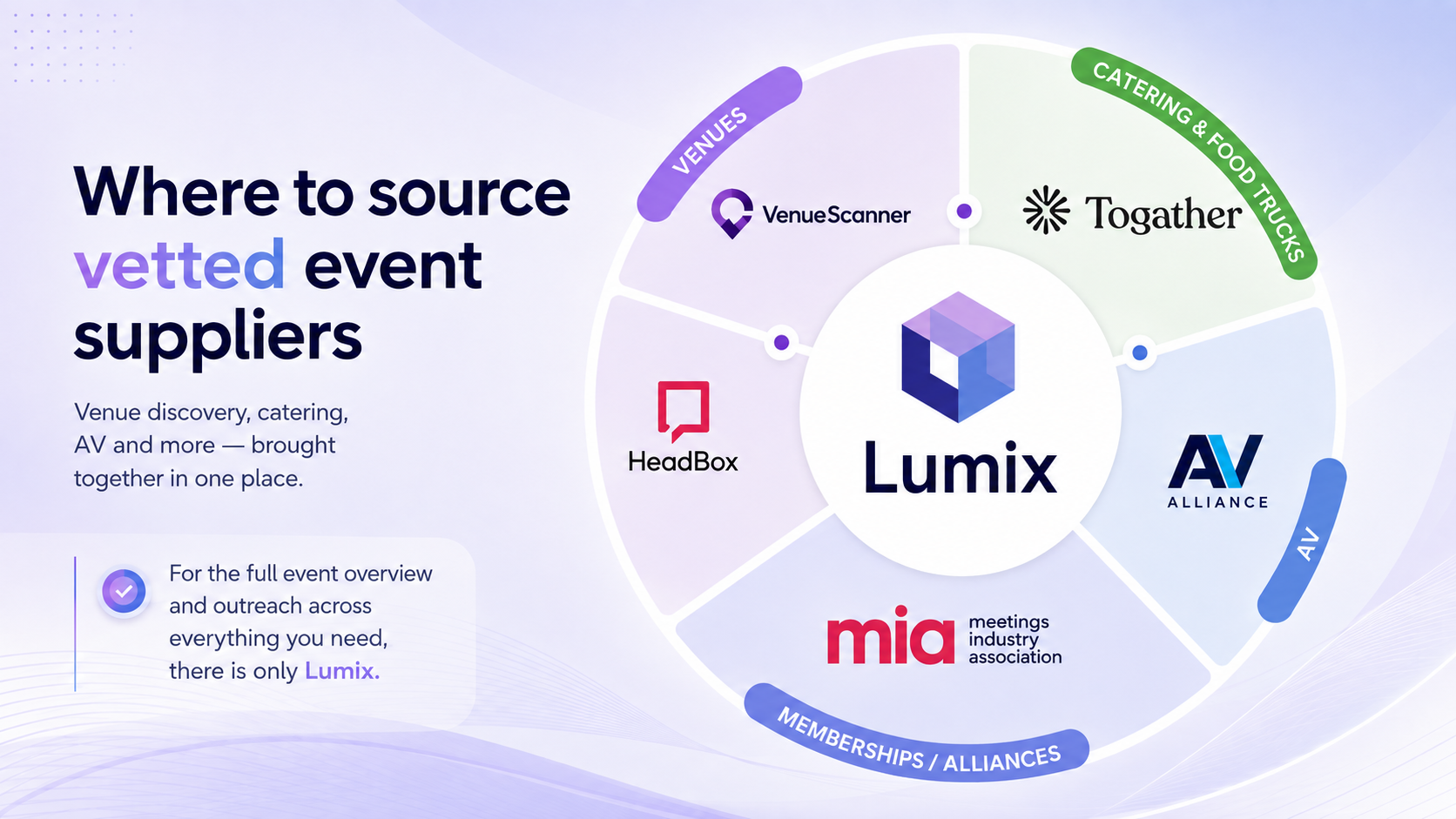
For venue discovery specifically, VenueScanner and HeadBox have both built strong platforms with real depth in that single category. Either is a solid choice if a venue is the whole brief, and both represent exactly the kind of focused, well-vetted marketplace UK event planning tools should be judged against.
For catering and food trucks, Togather has built comparable depth on the food and beverage side, again as a category specialist rather than a full-programme solution.
For AV, membership bodies such as the AV Alliance and the Meetings Industry Association hold significant collective expertise and are genuinely useful for research and benchmarking. The distinction worth knowing before relying on them for sourcing is structural rather than a quality judgement: neither operates as a marketplace, so a procurement director can research and benchmark through them but cannot initiate an RFP or reach out to a specific member directly through the organisation itself.
None of this makes any of these platforms weaker choices. It makes them category tools, which is exactly what they were built to be.
What actually separates good event supplier platforms
Regardless of category, the same four checks apply when assessing any event supplier marketplaces, specialist or otherwise.
Risk controls. Vendor risk reduction starts with how a supplier gets onto a network in the first place, not with a badge on a listing page. A network worth trusting reviews suppliers for financial stability and insurance cover as a condition of joining, and continues to rate them after every job, removing anyone who falls short rather than simply warning them.
Quote transparency. Quotes that arrive in different formats from different suppliers turn comparison into a project of its own. A platform worth using requires every supplier to summarise their quote against the same brief, so price differences reflect genuine variation rather than differences in what was actually included.
Briefing workflows. The manual version of event procurement means briefing each supplier individually and chasing responses one at a time. A platform that sends one complete brief to multiple suppliers simultaneously removes that overhead regardless of category.
Budget visibility. Event budget management depends on contracts and invoices living somewhere consistent, not scattered across email threads and shared drives. A platform worth relying on for a full programme should centralise that documentation and give a live view of spend.
How to choose based on your brief
If a brief sits entirely within one category, a specialist is often the simplest and most direct choice. VenueScanner or HeadBox for a venue-only brief, or Togather for catering, will do that one job well without the overhead of a broader system.
Most corporate events do not stay inside one category for long. A brief that spans a venue, AV, and catering means running the four checks above separately across several specialist tools and memberships, then reconciling contracts, invoices, and quote formats that were never designed to sit together.
This is the case for a single vetted network built to run across every category in a brief. Lumix operates a network of 4,000 supplier partners across 50+ supplier categories, applying the same risk controls, quote transparency, briefing workflow, and budget visibility consistently across venues, AV, catering, and everything else a programme requires, rather than treating each category as a separate relationship to manage.
The decision, simplified
Choosing between event supplier platforms in 2026 is not about finding the single best network. It is about matching the scope of the tool to the scope of the brief. A category specialist is the right call for a category-specific need. A full vetted network earns its place when a brief, or a full programme of events, spans more than one.
Lumix Blogs
Get the indise scoop: the latest tips, tricks, & product updates
Cvent vs Vetted Event Supplier Networks: A Procurement Comparison for UK Teams
Choosing between broad event supplier platforms and vetted networks shapes how much risk and cost control a procurement team actually has once a brief goes out.
Lumix Logic: The AI Agent That Changes Everything About Event Planning
Lumix Logic is live. Here's why it's the biggest shift in event planning technology in years — and what it means for your team.
Frequently Asked Question
Have another question? Please contact our team!
Yes. The platform provides side-by-side quote comparisons that show what’s included (and what isn’t) in each proposal. You’ll see cost breakdowns, supplier notes, and Lumix’s benchmarked pricing insights all designed to help you make confident, data-driven decisions.
Yes. You can upload and store your existing brief templates, or use Lumix’s AI-assisted builder to generate new ones. The platform also learns from your past events, so future briefs can be created faster with pre-filled details and preferred suppliers.
Absolutely. Lumix is built for flexibility. You can update or amend briefs at any time through quote revisions. When you make changes, suppliers are automatically notified and can adjust their quotes accordingly, keeping everything transparent and version-controlled.
A Lumix-vetted supplier has been verified for legal identity, financial health, insurance, certifications, and recent performance. We don’t just check paperwork once — we continuously monitor suppliers’ live performance on the platform to ensure they meet professional, safety, and compliance standards.
Our vetting process happens in three levels: Verified: Baseline identity and compliance checks, legal registration, sanctions screening, insurance, and minimum financial health scores. Certified: Category-specific evidence such as food-hygiene, rigging, or data-security certifications, depending on the supplier’s role. Audited: For high-value or critical suppliers, we add deeper due diligence including third-party audits, ESG assessment, and verified delivery KPIs on Lumix.
Yes. We align our vetting standards with leading UK and global frameworks such as Achilles, Hellios FSQS/JOSCAR, Avetta, SafeContractor, and EcoVadis. Where appropriate, Lumix integrates or recognises these certifications within our supplier profiles to avoid duplicate checks.