Event Strategy: How to Build a Successful Event Using an Event Strategy Template

Weekly newsletter
What Is Event Strategy?
For many organisations, the process of running an event begins in a familiar way. Someone decides that the company should host a conference, attend a trade show or organise a customer gathering. Planning begins almost immediately. Venues are explored, speakers are discussed, and the agenda starts to take shape.
While this approach may feel productive, it often skips a crucial step: defining the strategy behind the event in the first place.
Event planning focuses on how an event will happen. Event strategy focuses on why it should happen at all.
That difference is more significant than it first appears. Planning ensures that an event runs smoothly on the day, but strategy determines whether the event is designed to achieve something meaningful for both the organisation and its audience.
When strategy is missing, events often default to familiar formats and assumptions. They might attract a reasonable audience, deliver a good experience and even receive positive feedback, yet still struggle to demonstrate a clear business impact. When strategy is present, however, events become far more than logistical exercises. They become deliberate tools for achieving specific outcomes.
Event Planning vs Event Strategy
To understand the role of event strategy, it helps to distinguish it from the more familiar discipline of event planning.
Event planners are responsible for operational delivery. Their focus is on execution: securing venues, coordinating suppliers, managing schedules and ensuring that every detail runs smoothly. Their work is essential, and without it even the most ambitious events would fail.
Event strategists operate at a different level. Rather than focusing primarily on logistics, they concentrate on aligning events with broader organisational goals. They ask questions such as:
- Why does this event need to exist?
- Who is the event really for?
- What change should the event create for attendees?
- How will the organisation benefit from running it?
These questions shape the direction of the event long before practical decisions such as venues or speakers are considered. In this sense, planning determines how an event is delivered, while strategy determines what the event is trying to achieve.
Why Strategy Matters More Than Ever
The importance of event strategy has grown significantly in recent years. Events require considerable investment, not just in financial terms but also in time, resources and organisational focus. As budgets tighten and expectations increase, it is no longer enough for an event to simply exist or follow tradition.
Leaders increasingly expect events to contribute to tangible outcomes. These may include generating sales pipeline, strengthening customer relationships, launching new products, building brand authority or bringing communities together around shared ideas.
When events are approached strategically, they can support all of these objectives. A single well-designed event can influence multiple areas of a business at once: marketing, sales, partnerships, brand perception and community building. Without a clear strategy, however, events risk becoming isolated experiences that are enjoyable but difficult to justify.
A Strategic Approach to Event Design
Effective event strategy begins by stepping back from logistics and focusing on the bigger picture. Instead of starting with questions like Where should we host the event? or Who should speak?, strategic thinking starts with more fundamental considerations:
- What role should this event play within the organisation’s broader goals?
- What do attendees truly need from the experience?
- What outcomes should the event deliver for both the audience and the organisation?
Answering these questions provides the foundation for every decision that follows. It ensures that the event is designed intentionally rather than assembled through a series of disconnected planning choices.
What This Guide Will Cover
In the sections that follow, we’ll explore how to turn this strategic thinking into a practical framework for designing better events.
First, we’ll examine why many events struggle strategically, even when they are well planned. From there, we’ll introduce the four foundations of a strong event strategy, which form the basis of our event strategy template: defining the event’s purpose, understanding attendee needs, shaping the experience vision and designing the experience itself.
We’ll then explore how to use an event strategy template to structure your thinking, how to choose the right type of event for your objectives and how to measure success using frameworks such as ROI, ROO and ROE.
By the end of the guide, you’ll have a clear structure for approaching events not simply as logistical projects, but as strategic experiences designed to create lasting impact.
Why Many Events Fail Strategically
Walk into most event planning meetings and you will hear a familiar set of questions. Where should we host the event? How many people do we expect to attend? Who could deliver the keynote? Should the networking drinks happen before or after the closing session?
These are all valid questions, but they reveal something important about how events are often approached. The conversation begins with logistics rather than with strategy.
This is one of the main reasons why many events struggle to achieve meaningful impact. They may be well organised and enjoyable to attend, but they lack a clear strategic foundation. As a result, the event becomes a collection of activities rather than a deliberate experience designed to achieve specific outcomes.
Strategic failure rarely means an event goes badly. In fact, many events that feel successful on the surface still fall short when measured against broader organisational goals.
Understanding why this happens is the first step toward designing events more intentionally.
Starting With Logistics Instead of Purpose
One of the most common mistakes in event planning is beginning with the how rather than the why.
Teams often jump straight into decisions about venues, formats and speakers because these are tangible problems that need solving. But when planning starts this way, the event structure is shaped by practical considerations rather than by a clear strategic objective.
For example, an organisation might decide to run an annual conference simply because it has always done so. The event may continue to grow incrementally each year, adding new sessions or experiences, yet no one stops to ask a more fundamental question:
What role should this event actually play in the organisation’s strategy?
Without answering that question, it becomes difficult to evaluate whether the event is successful or even necessary.
Measuring the Wrong Things
Another reason events fail strategically is that success is often measured using the wrong metrics.
Attendance numbers are the most obvious example. Large audiences are easy to celebrate and easy to communicate internally, but attendance alone rarely reflects the true value of an event.
A conference with 2,000 attendees may appear impressive, yet deliver little measurable business impact. Conversely, a small executive roundtable with just 30 participants could influence millions in revenue or partnerships.
Strategically designed events therefore focus on deeper indicators of success. These might include:
- Sales pipeline influenced or generated
- Quality of relationships built during the event
- Customer retention and loyalty
- Brand authority or thought leadership
- Long-term community engagement
When organisations focus exclusively on surface-level metrics, they risk designing events that prioritise scale over impact.
Trying to Be Everything to Everyone
Another common challenge arises when event organisers attempt to satisfy too many audiences at once.
Many events try to combine multiple goals into a single experience: attracting new prospects, educating customers, showcasing products, entertaining sponsors and building community. While each of these objectives may be valid, attempting to serve all of them equally often results in an event that lacks a clear identity.
Attendees may enjoy the experience, but the event can feel unfocused. Sessions compete for attention, networking opportunities become diluted and the overall narrative of the event becomes unclear.
Strategic events are usually more focused. They prioritise a small number of outcomes and design the experience intentionally around those priorities.
Treating Events as Isolated Moments
Events are sometimes treated as standalone projects rather than as part of a broader organisational strategy.
Planning begins months before the event and ends shortly after it finishes. Once the venue has been cleared and the feedback surveys have been reviewed, attention shifts to the next project.
This approach overlooks the fact that events often generate value far beyond the few days they physically take place. The relationships formed, ideas shared and content created during an event can continue influencing an organisation’s growth long afterwards.
Strategic event thinking recognises this longer lifecycle. It treats events as platforms that contribute to ongoing marketing, sales and community-building efforts rather than as isolated experiences.
The Real Problem: Lack of Strategic Structure
Ultimately, many events fail strategically not because of poor planning, but because they lack a structured way of thinking about purpose, audience and outcomes.
Without a framework, planning decisions are often made reactively. Each choice may seem reasonable on its own, but the overall event gradually loses clarity and direction.
This is why many event teams now rely on structured strategic frameworks before planning begins. These frameworks help teams define the purpose of the event, understand who it is for and design an experience that supports both organisational goals and attendee needs.
In the next section, we’ll introduce the four foundational elements of a strong event strategy, a simple structure that helps ensure every event is designed with intention rather than assembled through logistics alone.
The Four Foundations of a Strong Event Strategy
If most events fail because they start with logistics rather than strategy, the obvious next question is: what should come first instead?
The answer is a clear strategic framework that defines why the event exists, who it is for and what it should achieve before any planning decisions are made.
Our event strategy template is built around four core pillars that provide this structure:
- Purpose
- Attendee Needs
- Experience Vision
- Experience Design
Together, these pillars move the conversation away from operational questions and toward strategic intent. They help ensure that every event is designed deliberately rather than assembled through a series of logistical decisions.
Let’s explore each pillar in turn.
Purpose
Every strong event strategy begins with purpose.
This goes beyond simply defining the theme of the event or the type of experience you want to create. Purpose asks a more fundamental question: why should this event exist at all?
At an organisational level, this means understanding how the event contributes to broader business goals. For example, the purpose of an event might be to:
- Launch a new product into the market
- Strengthen relationships with key customers
- Position the organisation as a thought leader in its industry
- Generate qualified sales opportunities
- Build a community around a shared topic or mission
Without this clarity, events can easily drift toward familiar formats that feel impressive but lack strategic impact.
Defining purpose provides the foundation for every other decision that follows.
Attendee Needs
Once the purpose of the event is clear, the next step is to focus on the people the event is designed for. Many events make the mistake of defining their audience too broadly. They aim to appeal to everyone and end up serving no one particularly well. A strategic approach instead asks: what do attendees truly need from this experience?
This means identifying:
- Primary attendee groups
- Secondary audiences who may also benefit
- Differences in expectations or motivations between those groups
It also means thinking beyond practical needs and considering emotional ones. Attendees may come for knowledge, connections, inspiration or recognition. Understanding these motivations helps shape an experience that feels genuinely valuable rather than simply informative.
Experience Vision
With purpose and attendee needs defined, the next pillar focuses on the overall direction of the event experience. The experience vision acts as a unifying idea that guides decisions throughout the planning process. It defines what the event should ultimately feel like and the change it should create.
This might include:
- The key takeaway attendees should leave with
- The type of atmosphere the event should create
- The broader impact the event should have on the organisation or community
Some teams also express this as a short thematic statement , a simple idea that captures the essence of the event and helps guide design decisions. A strong experience vision ensures the event has a clear identity rather than feeling like a collection of unrelated sessions or activities.
Experience Design
Only after the first three pillars are defined does the final pillar come into play: experience design. This is where strategic thinking begins to translate into practical planning. Experience design considers how the structure of the event will support the desired outcomes. It includes decisions about:
- The balance between content, networking and informal moments
- The length and pacing of sessions
- The overall duration of the event
- The choice of destination or platform
- The flow of the attendee journey
When these decisions are guided by purpose, attendee needs and experience vision, the event begins to feel cohesive and intentional.
From Strategy to Execution
These four pillars form the foundation of our event strategy template. They ensure that every event begins with a clear understanding of why it exists, who it serves and what it should achieve. Only once these elements are defined should teams move into detailed planning.
In the next section, we’ll explore how to use an event strategy template to structure this thinking and turn these pillars into a practical framework for designing better events.
How to Use an Event Strategy Template
Once the foundations of event strategy are understood, the next step is translating that thinking into a practical framework that teams can use consistently. This is where an event strategy template becomes valuable.
An event strategy template provides a structured way to capture the thinking behind an event before planning begins. Rather than jumping straight into logistics, the template encourages teams to step back and clarify the strategic elements that should guide every decision.In practice, using a template helps teams answer a series of essential questions.
First, it connects the event to the organisation’s broader purpose. Instead of treating the event as a standalone activity, it forces planners to consider how the experience contributes to the company’s mission, growth strategy or community objectives.
Second, it ensures the event is designed around attendee needs rather than internal assumptions. By defining who the event is truly for and what those people expect from the experience, organisers can avoid creating programmes that feel generic or unfocused.
Third, the template helps crystallise the overall vision of the event. This includes the outcomes the organisation hopes to achieve and the change the event should create for attendees.
Finally, it brings these ideas together through experience design. Once purpose, audience and vision are defined, the practical decisions around location, duration, agenda design and content become much easier to make because they are anchored in a clear strategy.
Used properly, an event strategy template acts as a compass for the entire planning process. It aligns stakeholders, clarifies priorities and ensures that operational decisions support the broader goals of the event rather than drifting away from them.
Choosing the Right Event Format for Your Strategy
Once a clear strategy is defined, the next important decision is selecting the type of event that best supports those goals.
Not all events are designed to achieve the same outcomes. A product launch, for example, serves a very different purpose from a customer conference or a networking summit. Yet many organisations default to familiar formats without fully considering whether they are the best vehicle for achieving their objectives.
Strategic event thinking begins by asking a simple question: what type of experience will best deliver the outcomes we want to achieve?
For events focused on brand awareness, larger gatherings such as conferences or trade shows often work well. These formats create visibility, attract diverse audiences and generate industry attention.
If the objective is deeper engagement or knowledge sharing, formats such as workshops, training events or user groups may be more effective. These environments allow for more interaction, learning and collaboration between attendees.
When the goal is business development, smaller formats such as executive roundtables, hosted buyer programmes or one-to-one meeting environments can often deliver stronger results. These settings prioritise meaningful conversations over scale.
The key point is that event format should follow strategy, not the other way around. When organisations start with a clear understanding of their goals and audience, selecting the right format becomes far more straightforward.
How to Measure Event Success
A strong event strategy does not end when the event finishes. In fact, some of the most valuable insights come from measuring how effectively the event achieved its intended outcomes.
One of the challenges in event measurement is that success can take different forms depending on the objectives of the event. Financial return is one important measure, but it is rarely the only one.
Many organisations therefore use a combination of three complementary frameworks when evaluating event performance.
Return on Investment (ROI) focuses on financial outcomes. It measures whether the revenue generated by an event, through ticket sales, sponsorship or influenced deals, exceeds the cost of producing it.
Return on Objectives (ROO) evaluates whether the event achieved its strategic goals. These goals might include generating qualified leads, increasing brand awareness, launching a product or strengthening relationships with customers.
Return on Emotion (ROE) considers the experiential impact of the event. It measures how attendees felt about the experience, whether it strengthened loyalty and whether it created memorable moments that shape long-term brand perception.
Together, these three lenses provide a more balanced understanding of event success. While ROI captures immediate financial outcomes, ROO and ROE help organisations evaluate the broader strategic and emotional value that events can create.
Measuring success in this way ensures that events continue to evolve and improve over time.
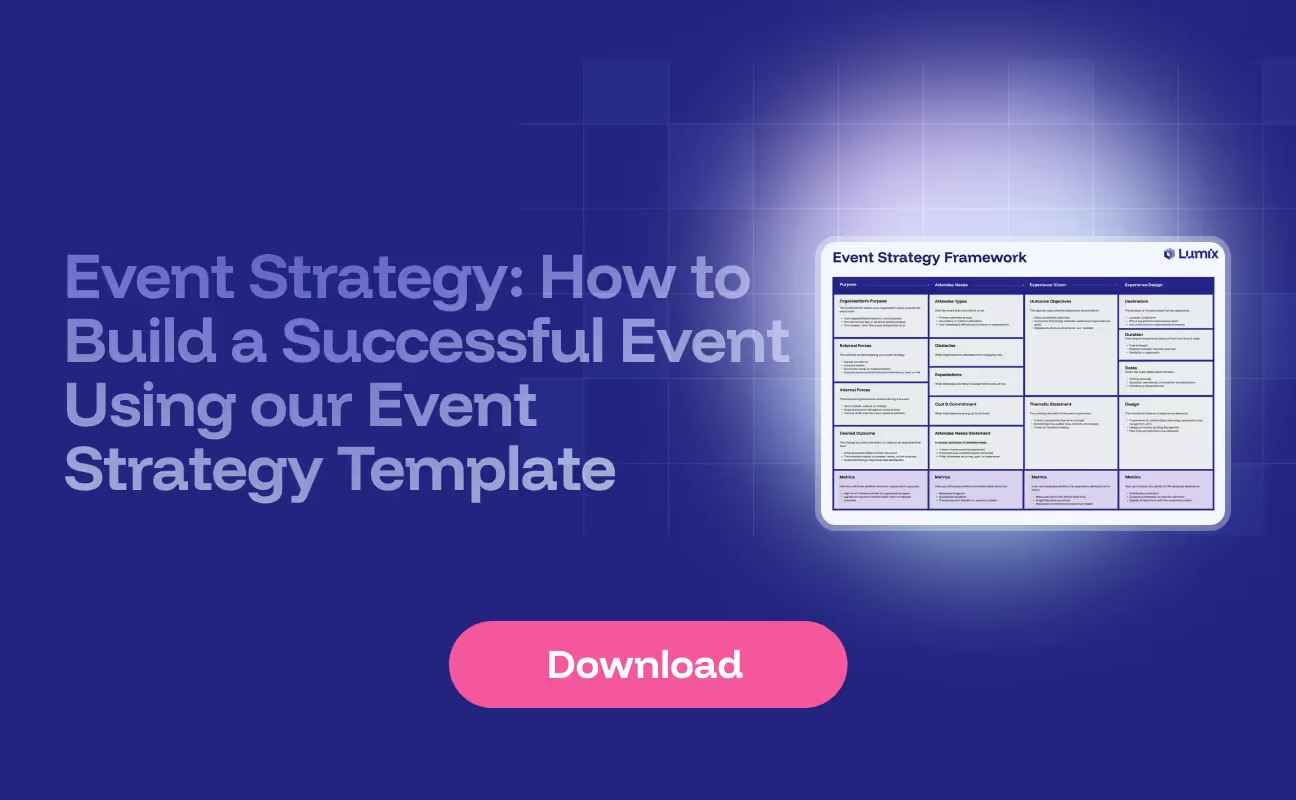
Download the Event Strategy Template
Designing events strategically requires structured thinking, and that is exactly what our event strategy template is designed to support.
The template provides a simple framework for capturing the four foundational elements of event strategy:
- Purpose: why the event exists and how it supports organisational goals
- Attendee Needs: who the event is designed for and what they expect from the experience
- Experience Vision: the change the event should create and the overarching idea that guides it
- Experience Design: how the event structure, agenda and environment bring the vision to life
By working through these elements before planning begins, teams can ensure that every aspect of the event is aligned with its intended outcomes.
This approach transforms events from logistical projects into intentional experiences that create lasting value for both attendees and the organisations behind them.
If you’d like to apply this framework to your own events, you can download our Event Strategy Template and use it as a starting point for your next event. It provides a practical structure for capturing strategic thinking, aligning stakeholders and designing experiences that are purposeful, engaging and measurable.

Lumix Blogs
Get the indise scoop: the latest tips, tricks, & product updates
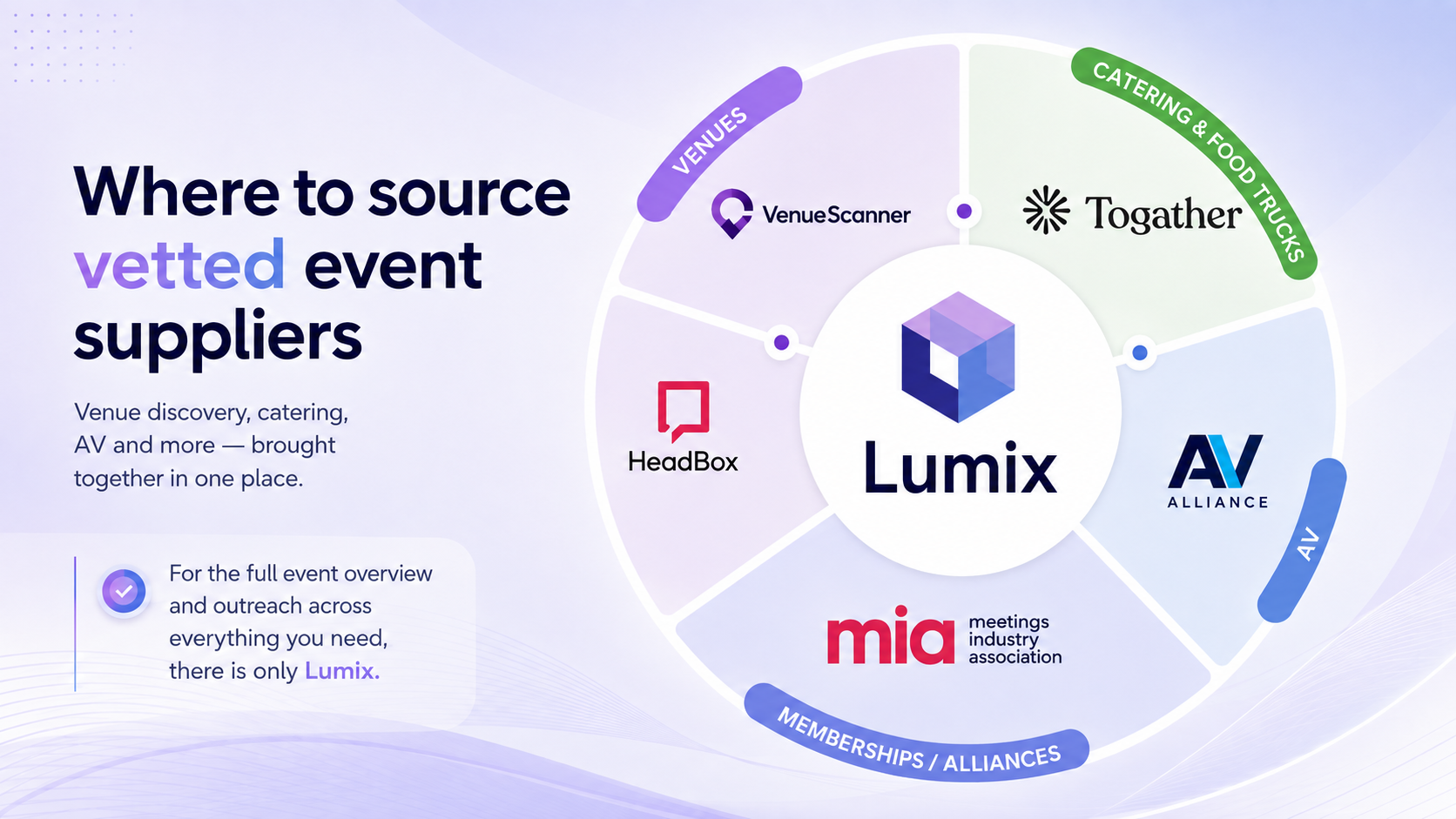
How to Choose a Vetted Event Supplier Network in 2026
Corporate event procurement in the UK increasingly runs through vetted vendor networks and specialist marketplaces rather than cold outreach, but the right choice depends on how many categories a brief actually spans.
Cvent vs Vetted Event Supplier Networks: A Procurement Comparison for UK Teams
Choosing between broad event supplier platforms and vetted networks shapes how much risk and cost control a procurement team actually has once a brief goes out.
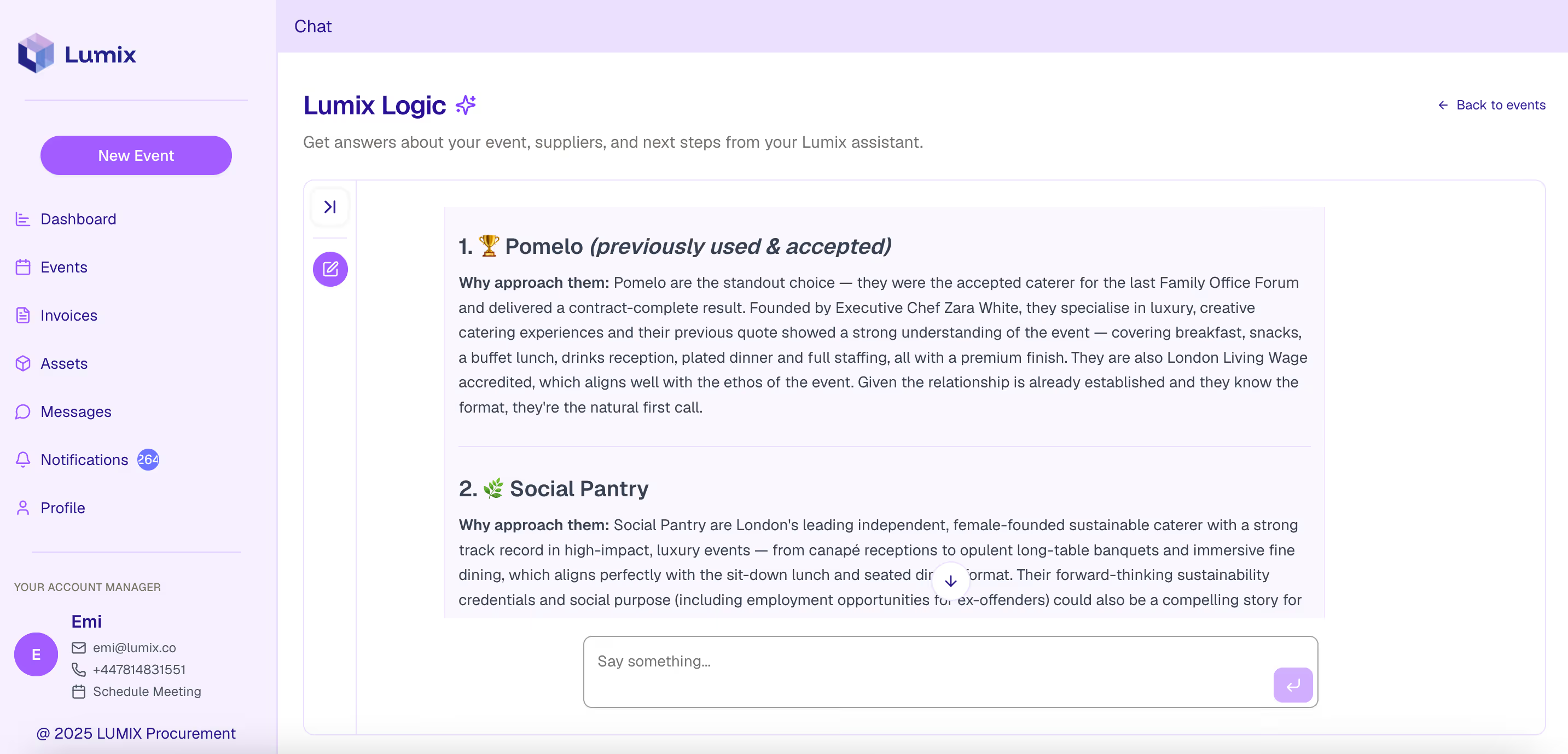
Lumix Logic: The AI Agent That Changes Everything About Event Planning
Lumix Logic is live. Here's why it's the biggest shift in event planning technology in years — and what it means for your team.
Frequently Asked Question
Have another question? Please contact our team!
Yes. The platform provides side-by-side quote comparisons that show what’s included (and what isn’t) in each proposal. You’ll see cost breakdowns, supplier notes, and Lumix’s benchmarked pricing insights all designed to help you make confident, data-driven decisions.
Yes. You can upload and store your existing brief templates, or use Lumix’s AI-assisted builder to generate new ones. The platform also learns from your past events, so future briefs can be created faster with pre-filled details and preferred suppliers.
Absolutely. Lumix is built for flexibility. You can update or amend briefs at any time through quote revisions. When you make changes, suppliers are automatically notified and can adjust their quotes accordingly, keeping everything transparent and version-controlled.
A Lumix-vetted supplier has been verified for legal identity, financial health, insurance, certifications, and recent performance. We don’t just check paperwork once — we continuously monitor suppliers’ live performance on the platform to ensure they meet professional, safety, and compliance standards.
Our vetting process happens in three levels: Verified: Baseline identity and compliance checks, legal registration, sanctions screening, insurance, and minimum financial health scores. Certified: Category-specific evidence such as food-hygiene, rigging, or data-security certifications, depending on the supplier’s role. Audited: For high-value or critical suppliers, we add deeper due diligence including third-party audits, ESG assessment, and verified delivery KPIs on Lumix.
Yes. We align our vetting standards with leading UK and global frameworks such as Achilles, Hellios FSQS/JOSCAR, Avetta, SafeContractor, and EcoVadis. Where appropriate, Lumix integrates or recognises these certifications within our supplier profiles to avoid duplicate checks.