How To Promote Your Event On Social Media | Channels, Best Practices And Real Life Examples.

Weekly newsletter
How To Promote Your Event On Social Media | Channels, Best Practices And Real Life Examples.
Brace yourself. This article is a long one, but for good reason. Social media remains one of the most used channels for event promotion and event marketing so the question on how to utilise it for your event can’t be answered in a “10 top tips guide”. Social media is nuanced, and different platforms require a different approach.
In this blog we’ll aim to go a little deeper, at the very least arming you with the knowledge to get started or further your planning and research because the reality is this blog could be 10 blogs.
Our team have worked in the events industry for over 50 years combined so if at the end of it you want to get in touch for further help, we’d be happy to chat. Coming up we’ll explore:
- Which social channels to consider and why
- The fundamentals of advertising on these channels
- Cover audience building, creative strategies and objectives
- Content - social media promotion can’t exist without it
- Email marketing - whilst not social media your email marketing ties hand in hand
- Expanding your audience on social media by piggy backing on others
- Some real life examples of how event organisers have utilised social media
1. What Social Media Platforms Should You Consider When Promoting an Event?
Choosing the right social media platforms to promote your event is less about chasing trends and more about understanding how and where your audience makes decisions. Every platform has its own culture, consumption habits, and role within the event discovery journey. The most effective event marketing strategies recognise that social media rarely works in isolation - instead, it shapes perception, builds confidence, and shortens the path to conversion across multiple touchpoints.
Rather than asking “Which platform should we be on?”, event organisers should be asking a more strategic question: Where does my audience already spend time, and what kind of content influences their decision to attend an event like this?
Instagram has become the primary visual decision-making platform for events. It’s where people form an emotional response to an experience long before they’ve looked at an agenda or ticket price.
For many events, Instagram acts as a digital shop window. Potential attendees scroll past hundreds of competing messages every day, and what cuts through is not necessarily the most informative content, but the most convincing. Crowd energy, production value, speaker moments, backstage footage, and testimonials all help answer the unspoken question: “Is this event worth my time?”
Large-scale conferences like Web Summit have mastered this approach. Their Instagram presence rarely focuses on ticket pricing or logistics. Instead, it highlights packed keynote rooms, high-profile speakers on stage, and cinematic crowd shots that reinforce the event’s scale and status. The result is social proof at scale - attendees don’t just see an event, they see thousands of people choosing to be part of it.
Instagram is particularly effective for:
- Conferences and festivals
- Networking-led or community-driven events
- Brand experiences and experiential activations
Its role is predominantly top- and mid-funnel. People may not click through and buy a ticket immediately, but repeated exposure builds familiarity and confidence. When Instagram works well, it reduces friction later in the journey - by the time someone reaches a ticket page, the event already feels credible.
Facebook is often written off as declining or outdated, yet it remains one of the most effective platforms for driving consistent event demand, particularly when paid promotion is involved.
The strength of Facebook lies less in organic posting and more in its ability to systematically reach and re-reach relevant audiences. Event organisers can target previous attendees, website visitors, email subscribers, and lookalike audiences built from first-party data. This makes Facebook especially powerful for events with longer sales cycles, higher ticket prices, or repeat editions.
Many large B2B events continue to rely heavily on Facebook for this reason. Events run by organisations like Founders Forum often use Facebook as a retargeting backbone - ensuring that anyone who has interacted with speakers, agendas, or past event content continues to see reminders as the event approaches. This repeated exposure plays a crucial psychological role: it normalises the decision to attend.
Despite shifting sentiment, Facebook still captures enormous amounts of passive attention. Even when users claim they “don’t really use it anymore”, behaviour data often shows otherwise. For event promotion, that passive consumption is valuable - it keeps your event top of mind without demanding active engagement every time.
LinkedIn plays a very different role in event promotion, but when it fits, it fits exceptionally well.
LinkedIn is not a discovery platform in the same way Instagram is. Instead, it’s where events are evaluated through the lens of professional value. Attendees are asking: Will this help me learn something useful? Will it expand my network? Will it reflect well on me to attend?
This makes LinkedIn particularly effective for:
- B2B conferences
- Leadership and executive events
- Industry-specific summits
- High-ticket, insight-led experiences
A strong example is how speaker-led promotion works on LinkedIn. When recognised industry figures share that they’re speaking at an event, the endorsement carries far more weight than a branded advert. This is why many events invest heavily in equipping speakers with content they can share from their personal profiles - it combines reach with trust.
For events like executive roundtables or finance-focused conferences, LinkedIn often becomes the platform that converts belief into action. People may discover the event elsewhere, but LinkedIn helps validate the decision.
TikTok
TikTok has changed how events can generate awareness, but it is also the platform most likely to be misunderstood or misused.
TikTok is not built for polished marketing. It rewards speed, authenticity, and cultural relevance. When events succeed on TikTok, it’s usually because the content feels native - behind-the-scenes clips, build-ups, crowd reactions, and raw moments that make viewers feel close to the action.
Music festivals like Coachella demonstrate this perfectly. TikTok content around the festival often comes from attendees rather than official channels, yet it fuels global awareness and FOMO at an extraordinary scale. The platform becomes an amplifier of cultural relevance rather than a direct sales tool.
For most events, TikTok’s role is firmly top-of-funnel. It introduces new audiences, builds buzz, and fills retargeting pools - but it rarely drives immediate ticket purchases on its own. Events that lack visually compelling moments or the capacity to produce frequent content often struggle to see meaningful returns.
Used intentionally, TikTok can be powerful. Forced, it becomes a distraction.
Important: Where Does Your Audience Actually Live?
While each platform has its strengths, the reality for most event organisers is that Meta platforms still dominate attention time. Instagram and Facebook together offer the most reliable combination of scale, targeting, creative flexibility, and measurable outcomes.
That doesn’t mean every event should use every platform. The most effective strategies are selective. They focus on one or two primary channels, understand the role each plays in the funnel, and commit to consistency rather than coverage.
Social media doesn’t sell tickets in a vacuum - it builds belief. The platforms you choose should reflect how your audience discovers events, who they trust, and what convinces them to commit.
2. The Fundamentals of Paid Social Media Marketing for Promoting Events
No matter which platform you choose, successful social media marketing for events always comes back to the same three fundamentals: audience, creative, and objective. Get one of these wrong and performance suffers. Get all three working together and social becomes one of the most reliable demand drivers in your event marketing mix.
What’s important to understand is that these elements don’t operate independently. Audience selection shapes what creative will resonate. Creative determines which objectives you can realistically optimise for. And objectives influence how platforms deliver your ads and who ultimately sees them.
Event marketing fails on social when teams treat these as separate tasks rather than a connected system.
Audience: Precision Beats Scale Every Time
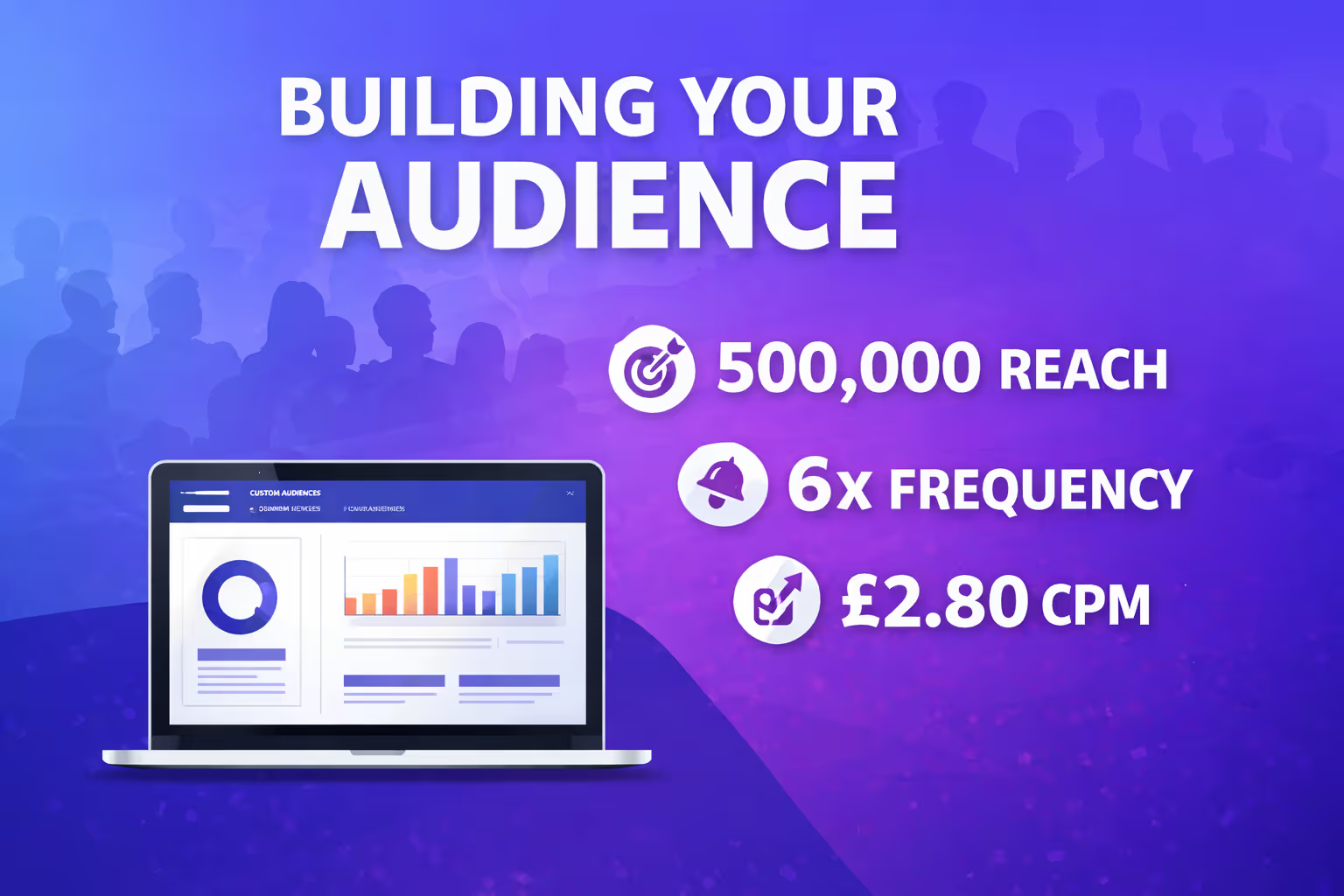
The biggest waste of event marketing budget on social media usually comes down to poor audience definition. Too broad, and you’re paying to reach people who will never attend. Too narrow, and you cap scale before momentum has time to build.
The strongest event campaigns start with first-party data. This includes past attendees, newsletter subscribers, people who have downloaded content, and visitors to your website. Platforms owned by Meta are particularly strong here because they allow you to upload these audiences and build lookalikes that mirror real attendee behaviour rather than assumptions.
For example, many established conferences will run their first paid campaigns exclusively to previous attendees and engaged users. This does two things. First, it captures low-hanging fruit - people already familiar with the event. Second, it feeds platforms high-quality signals that improve delivery when campaigns are later expanded to broader audiences.
A common and effective structure is a two-layer approach. The first layer focuses on reach and awareness, targeting broader lookalike or interest-based audiences. The second layer is retargeting - ads served only to people who have visited the event site, watched videos, engaged with posts, or interacted with emails. This mirrors how people actually decide to attend events: rarely in one step, almost always through repeated exposure.
From a measurement perspective, early-stage campaigns should be judged less on conversions and more on signals of efficiency and relevance. Metrics such as reach, frequency, impressions, CPM, and CPC help determine whether your message is landing with the right people. As a rough benchmark, many event campaigns on Meta aim to keep CPMs competitive enough to sustain frequency without fatigue, while allowing CPCs to remain low enough that retargeting pools grow meaningfully over time.
Creative: Testing Beats Taste
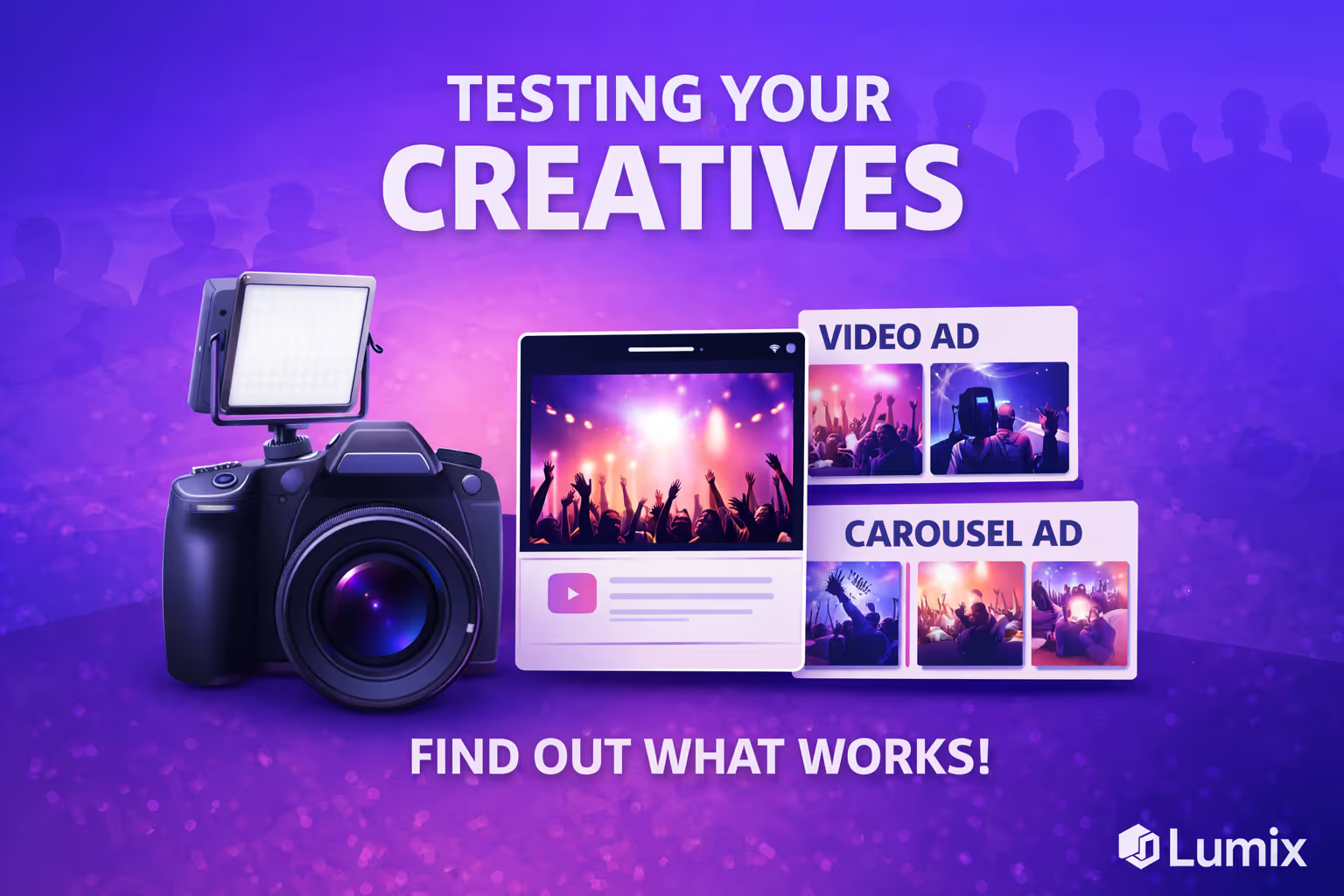
One of the hardest shifts for event teams to make is accepting that creative performance is discovered, not predicted.
What organisers think will work - the best speaker, the most impressive statistic, the most polished video - often underperforms against content that feels more human, more specific, or more contextual. Social platforms reward relevance, not perfection.
This is why the most effective event marketers treat creative as an experimentation process. Rather than relying on one or two hero assets, they test multiple formats, messages, and angles simultaneously. Over time, patterns emerge. Certain speakers outperform others. Certain formats consistently drive clicks. Certain hooks stop the scroll more effectively.
A good example of this approach can be seen in how large technology conferences promote speakers. Instead of one generic “Meet our speakers” video, they often test individual clips, quote-led statics, short agenda breakdowns, and testimonial-style videos side by side. The winning creative then informs not just paid ads, but organic posts and email campaigns too.
Creative should always be built with the audience in mind. Senior professionals respond to credibility and outcomes. Community-led events perform better with emotion and social proof. Festivals thrive on energy and atmosphere. The role of creative is not to describe the event, but to translate its value into a format the audience already understands.
Objective: Aligning What You Show With What You Want People to Do
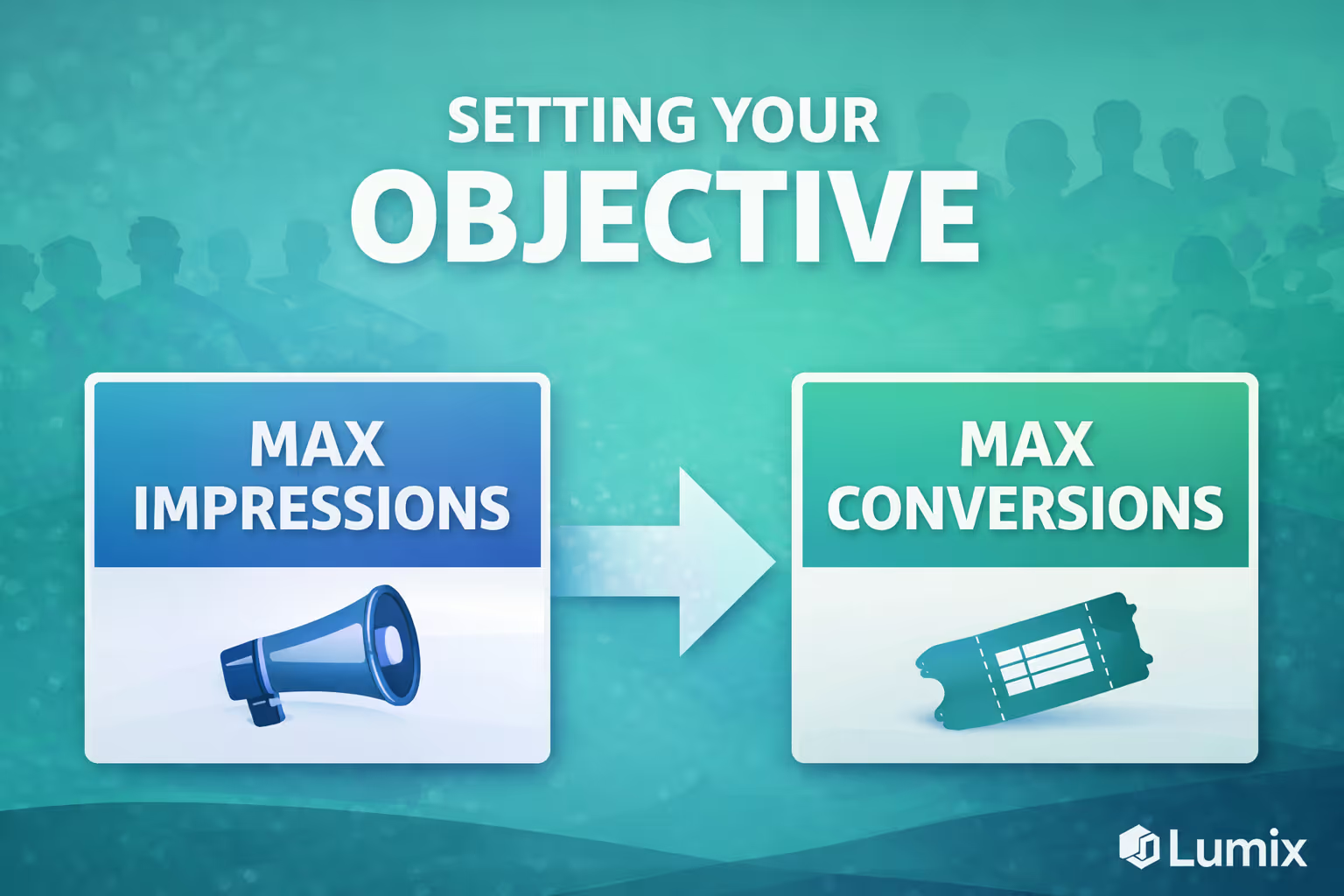
Social platforms optimise delivery based on the objective you choose, which makes objective selection one of the most important - and misunderstood - decisions in event marketing.
If your objective is ticket sales, the platform will prioritise showing ads to people most likely to convert. If your objective is reach or video views, it will prioritise people most likely to consume content. Problems arise when creative and objective are misaligned.
Static images, clear messaging, and direct calls to action generally perform better for conversion-focused campaigns, such as ticket purchases. These formats reduce friction and make the next step obvious. In contrast, video and interactive formats tend to perform better in awareness and prospecting campaigns, where the goal is engagement rather than immediate action.
This is why many successful event campaigns deliberately separate objectives by funnel stage. Awareness campaigns introduce the event and its positioning. Consideration campaigns deepen understanding through speakers, agendas, or testimonials. Conversion campaigns then focus on urgency, scarcity, and clarity.
Trying to force a single campaign to do everything usually leads to disappointing results.
Paid Social Won’t Save a Weak Community
More on this on marketing your event organically but one of the most persistent myths in event marketing is that paid ads can compensate for a lack of community or organic presence. In reality, paid social amplifies what already exists - it doesn’t replace it.
Events that consistently perform well on social almost always have some form of organic foundation. This might be an engaged LinkedIn following, an active email list, a recognisable speaker network, or a community that regularly shares content. Paid media then accelerates reach and frequency, rather than trying to create belief from scratch.
You can see this clearly in recurring event brands. Over time, organic engagement increases, retargeting pools grow, and paid campaigns become more efficient. The cost of selling tickets drops because trust has already been established.
For new events, this means paid social should be viewed as part of a broader system. Content, speakers, partnerships, and community-building efforts all feed into performance. When these elements work together, paid ads become a lever rather than a crutch.
Key Takeaway: Content, Audience & Objective Is Your Key System
What separates high-performing event marketing from underwhelming campaigns is not a single clever ad or platform hack. It’s the systemic alignment between audience, creative, and objective.
When organisers understand who they’re targeting, test creative relentlessly, and align objectives with how people actually behave, social media becomes predictable and scalable. When they don’t, it becomes expensive and frustrating.
In the next section, this system is taken one step further - because no amount of optimisation matters if you don’t have compelling content to fuel it.
3. Content, Content, Content: Why Events Should Think Like Media Brands
If social media is the distribution engine for event promotion and marketing, then content is the fuel that keeps it running. And yet, for many events, content is still treated as a by-product rather than a strategic asset.
The irony is that events are inherently content-rich. They bring together people, ideas, energy, environments, and moments that are difficult to replicate elsewhere. When captured properly, that material doesn’t just help sell the next event - it compounds in value over time.
The most effective event organisers think about content not as something they post once, but as something they systematically generate, reuse, and build upon.
Events Are One of the Few Truly Renewable Content Sources
Unlike many marketing activities, events naturally produce moments people care about. Speakers share original thinking. Attendees react in real time. Conversations happen that feel relevant and current. Visually, events offer scale, atmosphere, and emotion - all things social platforms reward.
Large conferences like Web Summit have turned this into a repeatable model. Their marketing doesn’t start when tickets go on sale; it’s fuelled by years of accumulated footage, speaker clips, and audience reactions. Each edition of the event creates raw material that feeds promotion for the next.
This is the mindset shift many organisers need to make. An event should not be viewed as a single marketing moment, but as a content engine with an annual (or recurring) output.
Content Should Be Planned Before the Event, Not Scrambled During It
One of the most common mistakes event teams make is waiting until the event is live to think about content. At that point, everything feels urgent, resources are stretched, and content capture becomes reactive rather than intentional.
High-performing teams plan content capture as deliberately as they plan staging or production. Before the event even begins, they know:
- Which moments matter most
- Which formats they want to capture
- How content will be used after the event
This might include time-lapse footage of venue builds, short interviews with speakers backstage, crowd reactions during key moments, or testimonials captured immediately after sessions. None of this requires cinematic production - but it does require foresight.
Festivals like SXSW have long understood this. Much of the content that circulates during and after the festival is designed to document the experience rather than promote it directly. That documentation then becomes the strongest promotional asset for future editions.
Repurposing Is Where the Real Leverage Lives
The value of event content rarely comes from the first time it’s used.
A single panel discussion can be turned into:
- Short video clips for social
- Quote graphics
- Blog content
- Email snippets
- Speaker-led posts
- Retargeting ad creative
This repurposing model is what allows event teams to stay visible for months without constantly creating something new. It also ensures consistency - audiences see the same ideas reinforced across channels, which builds familiarity and trust.
Music festivals like Coachella demonstrate this at scale. Much of their social presence is driven by content captured organically by attendees, which is then reshared and amplified. The result is a constant stream of authentic content that reinforces cultural relevance long after the gates close.
For smaller or more niche events, the principle is the same. You don’t need more content - you need better systems for extracting value from what you already have.
Live Content Creates Momentum You Can’t Manufacture Later
There is something uniquely powerful about content captured during an event while it’s happening. Live moments create urgency, excitement, and a sense of being “in the room”, even for people who aren’t there.
Posting in real time does two important things. First, it validates the decision of those who have already bought tickets - reinforcing that they’re part of something worthwhile. Second, it plants the seed for future attendance by showing what people missed.
This is particularly effective for recurring events. When potential attendees see live content year after year, attending starts to feel inevitable rather than optional.
Importantly, live content doesn’t need to be perfect. In fact, lo-fi, immediate footage often outperforms heavily edited material because it feels real. Platforms prioritise authenticity, and audiences respond to it.
Content Is What Turns One Event Into The Many Touchpoints You Need
Without content, an event exists only on the day it happens. With content, it exists all year.
This is why the most successful events increasingly behave like media brands. They don’t disappear between editions. They continue conversations, share insights, and reinforce their positioning long after the final session ends.
For event organisers, this is where social media stops being a promotional afterthought and becomes a strategic asset. Content bridges the gap between editions, keeps audiences warm, and lowers the cost of selling tickets next time around.
The events that win long term are rarely the ones with the biggest ad budgets. They’re the ones that understand how to capture value once and distribute it many times.
4. Email and Social Media: The Event Marketing Flywheel Most Teams Underuse
Email marketing is often described as “obvious” in event promotion - and that’s precisely why it’s frequently underused or misused. Many organisers treat email as a broadcast channel: upload a list, send announcements, hope for ticket sales.
The most effective event teams think about email very differently. They treat it as the centre of a two-way flywheel, where email and social media continuously feed and improve one another.
At the heart of this flywheel is first-party data - and in a world where paid targeting is becoming more restricted, that data is one of the most valuable assets an event can own.
Email Is Your Most Valuable Audience Asset
Social media platforms are powerful distribution engines, but you don’t own the audience on them. Algorithms change, reach fluctuates, and costs rise. Email, by contrast, is an owned channel. When someone gives you their email address, they are signalling interest and trust - two things that directly correlate with event attendance.
This makes email lists uniquely valuable for events. Not just for sending campaigns, but for informing who you should be targeting on social in the first place.
Platforms owned by Meta allow event organisers to upload email lists and create custom audiences or lookalike audiences based on real behaviour. That means your paid social campaigns are no longer based on guesswork or broad interests, but on people who resemble those most likely to attend.
In other words, email doesn’t just convert demand - it improves how efficiently you generate it.
Use Social Media as a Distribution Layer for Email Capture
The flywheel works in the opposite direction too. Social media should not exist solely to sell tickets; it should also be used to distribute value that earns email sign-ups.
This is where content plays a critical role. Guides, speaker insights, session previews, highlight reels, industry reports, or early-access announcements all provide reasons for someone to exchange their email address before they’re ready to commit to attending.
Many successful conferences now treat their social channels as the top of their email funnel. Paid and organic posts promote content rather than tickets, especially early in the promotion cycle. Those email captures then become warm, high-intent audiences that can be nurtured over time.
Events like SXSW have built massive databases this way. Long before tickets go on sale, they offer value through content, announcements, and community updates that keep people engaged year-round.
Why This Beats “Spray and Pray” Email Marketing
When email lists are built intentionally through social activity, segmentation becomes natural rather than forced. You know which content people engaged with. You know which campaigns drove sign-ups. You know which topics or speakers resonated.
This allows email marketing to move away from generic blasts and towards relevance-led communication. Instead of sending the same message to everyone, event teams can tailor messaging based on behaviour - whether someone downloaded a guide, watched a video, or clicked through from a specific campaign.
The result is not just higher open rates or click-through rates, but a more efficient sales funnel overall. Engaged email audiences convert more easily, cost less to retarget, and provide better signals back into social platforms.
Closing the Loop: Feeding Engagement Back Into Social
The final stage of the flywheel is often overlooked, but it’s one of the most powerful.
Email engagement - opens, clicks, downloads - can be fed back into social platforms to create high-quality retargeting and lookalike audiences. People who consistently engage with email content are some of the strongest predictors of ticket purchase. Using these signals to inform paid social delivery dramatically improves efficiency.
At this point, email and social are no longer separate channels. They are part of a single system where each interaction improves the next one.
Social drives content distribution. Content captures emails. Emails nurture intent. Engagement refines social targeting. And the cycle repeats.
The Long-Term Payoff for Event Marketing Teams
This flywheel approach is particularly powerful for recurring events. Over time, email lists grow, targeting becomes sharper, paid costs fall, and organic reach improves because audiences are already invested.
Instead of starting from zero each year, event teams compound momentum. Each edition of the event strengthens the system rather than resetting it.
For organisers willing to think beyond single campaigns, email is no longer just a conversion channel - it’s the data backbone that makes social media marketing smarter, cheaper, and more predictable.
5. Promoting Your Event By Expanding Your Audience On Social
No matter how strong your social presence or how engaged your email list is, every event eventually hits a ceiling if it relies solely on its own channels. The fastest way to break through that ceiling isn’t more ad spend - it’s access to other people’s audiences.
The most successful events don’t grow in isolation. They grow by intentionally partnering with brands, individuals, and communities that already have the trust of the audience they want to reach. When done well, this doesn’t feel like promotion at all. It feels like recommendation.
This is where audience expansion stops being transactional and starts becoming strategic.
A Borrowed Audience Converts Better Than Cold One
When an event is promoted by a partner, sponsor, or respected individual, it enters the market with credibility already attached. The audience isn’t encountering a brand-new message from an unfamiliar organiser - they’re seeing something endorsed by a source they already trust.
This is why events like TEDx scale so effectively at a local level. Each event benefits from the global TED brand, but also from local partners, speakers, and institutions that actively promote it to their own networks. The audience expansion is layered, not linear.
From a performance perspective, these audiences are often warmer than even well-targeted paid social traffic. They’re pre-qualified by association.
Use Sponsors as Distribution Partners, Not Just Logos
One of the biggest missed opportunities in event marketing is how sponsorships are activated. Too often, sponsors are treated as visual add-ons - logos on slides, banners on websites, mentions in programmes.
In reality, sponsors can be some of your most powerful distribution partners.
Sponsors already have email lists, social followings, and customer bases that overlap with your target audience. When sponsorship packages include structured promotional commitments - such as email sends, social posts, or content collaborations - the value of that partnership increases dramatically for both sides.
Events like INBOUND have long understood this. Sponsors don’t just show up on-site; they actively promote their involvement before the event, driving awareness to audiences that already trust them. That promotion feeds directly into the event’s email capture and retargeting systems, strengthening the flywheel you’ve already built.
The key shift is mindset: sponsors shouldn’t just pay for visibility - they should help create demand.
Influencers and Industry Voices: Relevance Over Reach
Influencer marketing is often misunderstood in the context of events. The goal isn’t to find the biggest following; it’s to find the most relevant voice.
In B2B and professional events especially, smaller creators with highly engaged audiences often outperform larger accounts. A respected industry practitioner sharing why they’re attending or speaking at an event carries far more weight than a generic promotional post.
This is why speaker promotion is so powerful. When speakers actively share their involvement - not just that they’re speaking, but what they’ll be discussing and why it matters - their networks become an extension of your marketing team.
Crucially, this content doesn’t just drive traffic. It drives email capture and social engagement that can be fed back into your targeting systems. People who click through from a speaker’s post or sign up for a related resource are signalling high intent.
Think About Co-Branded Content as a Growth Lever
Beyond one-off promotions, some of the strongest audience expansion comes from co-created content. Joint webinars, reports, panel discussions, or downloadable guides allow events to tap into partner audiences in a way that feels genuinely valuable.
This approach works particularly well early in the promotion cycle, when pushing ticket sales too hard can feel premature. Instead, the event becomes a platform for insight, learning, or community - with email capture as the primary goal.
Over time, this content compounds. It fills your CRM with qualified leads, fuels social retargeting, and gives you permission to communicate long before you ask for a ticket purchase.
This is audience expansion that strengthens your owned channels, not just a temporary spike in awareness.
Plug External Audiences Into the Flywheel
What makes partnerships truly powerful is how they integrate into the broader system you’ve already built.
Partner-driven traffic can:
- Feed email capture for ongoing nurturing
- Populate high-intent retargeting audiences on social
- Improve lookalike audience quality
- Lower paid acquisition costs over time
Rather than sitting outside your marketing engine, external audiences become fuel for it. Each collaboration doesn’t just promote this event - it improves how efficiently you can promote the next one.
6. Promoting Your Event Organically on Social Media
Organic social media is often treated as the poor cousin to paid promotion - something you do because you “should”, rather than because it’s strategically essential. In reality, organic activity plays a very specific role in successful event marketing: it creates trust, momentum, and proof that paid activity alone cannot manufacture.
The mistake many event teams make is expecting organic social to drive ticket sales in isolation. That’s rarely its job. Instead, organic activity strengthens every other part of the ecosystem you’ve already built.
Organic Social Is Where Belief Is Built
Paid ads can introduce an event, but organic social is where people decide whether they believe in it.
Before buying a ticket, most people will look for reassurance. They’ll check your Instagram feed, scroll through LinkedIn posts, or scan comments to see whether the event feels legitimate, active, and well-attended. An inactive or overly promotional feed creates doubt, even if your ads are strong.
This is why organic social should be treated as a living record of the event, not just a marketing channel. Behind-the-scenes moments, speaker announcements, planning updates, and community interactions all signal that something real is happening.
Events like Web Summit use organic social not to sell aggressively, but to continuously reinforce credibility. Their feeds are a mix of insight, anticipation, and social proof - making paid promotion more effective simply by existing alongside it.
Use Organic Content To Fuel Paid Performance
One of the most underappreciated roles of organic social is how directly it improves paid media efficiency.
When people engage with organic posts - watching videos, liking content, clicking links - those interactions create high-quality engagement signals. On platforms owned by Meta, that engagement can be retargeted or used to build lookalike audiences that outperform cold interest targeting.
In practical terms, organic social helps you warm audiences before you pay to reach them again. Someone who has seen your event multiple times organically will respond differently to an ad than someone encountering it for the first time.
This is why organic posting consistency matters. It’s not about going viral; it’s about steadily feeding the funnel with engaged users who lower acquisition costs later.
Your Community Is Formed Organically
Paid campaigns are one-way by design. Organic social, by contrast, is inherently conversational.
Comments, replies, shares, and DMs are where early community forms - and for events, community is often the strongest long-term growth lever. People don’t just attend events because of speakers or agendas; they attend because of who else will be there.
When organisers actively engage with comments, reshare attendee content, and highlight community voices, they turn passive followers into participants. Over time, these participants become advocates - tagging friends, sharing announcements, and amplifying reach without being asked.
This dynamic is especially powerful for recurring or niche events. Organic social becomes the connective tissue between editions, keeping the audience warm long after the event has ended.
Think About Organic In the Paid and Email Flywheel
Organic activity plays a critical role in the content and email flywheel you’ve already outlined.
Rather than pushing ticket links constantly, high-performing event teams use organic social to distribute value: clips from previous talks, practical insights, downloadable guides, or early announcements. These posts drive email sign-ups, which then feed segmented, relevant email marketing rather than generic blasts.
In turn, email engagement provides signals that can be fed back into social platforms for smarter targeting. Organic social is the top of that loop - the entry point that turns attention into data.
This is where organic promotion becomes strategic rather than cosmetic.
You Can’t Promote Your Event Entirely Organically
It’s important to be honest: organic social alone is rarely enough to sell out an event, especially at scale. Algorithms limit reach, timelines move quickly, and competition for attention is intense.
But that doesn’t make organic activity optional.
Without it, paid ads feel hollow. Email lacks context. Partnerships have nothing to reinforce. With it, everything works better.
Organic social provides continuity, authenticity, and proof. It makes your event feel alive rather than advertised.
How To Think About Organic When Marketing Your Event
The most effective way to think about organic social is not as a channel that “drives sales”, but as one that reduces friction everywhere else.
- It builds trust before someone clicks an ad.
- It warms audiences before you retarget them.
- It strengthens community before you ask for commitment.
When organic activity is aligned with content, email, partnerships, and paid amplification, it becomes a force multiplier rather than a standalone effort.
And that’s when it starts to earn its place in the strategy.
25+ Examples of How Event Organisers have promoted their event on social media
Lumix Blogs
Get the indise scoop: the latest tips, tricks, & product updates
How to Choose a Vetted Event Supplier Network in 2026
Corporate event procurement in the UK increasingly runs through vetted vendor networks and specialist marketplaces rather than cold outreach, but the right choice depends on how many categories a brief actually spans.
Cvent vs Vetted Event Supplier Networks: A Procurement Comparison for UK Teams
Choosing between broad event supplier platforms and vetted networks shapes how much risk and cost control a procurement team actually has once a brief goes out.
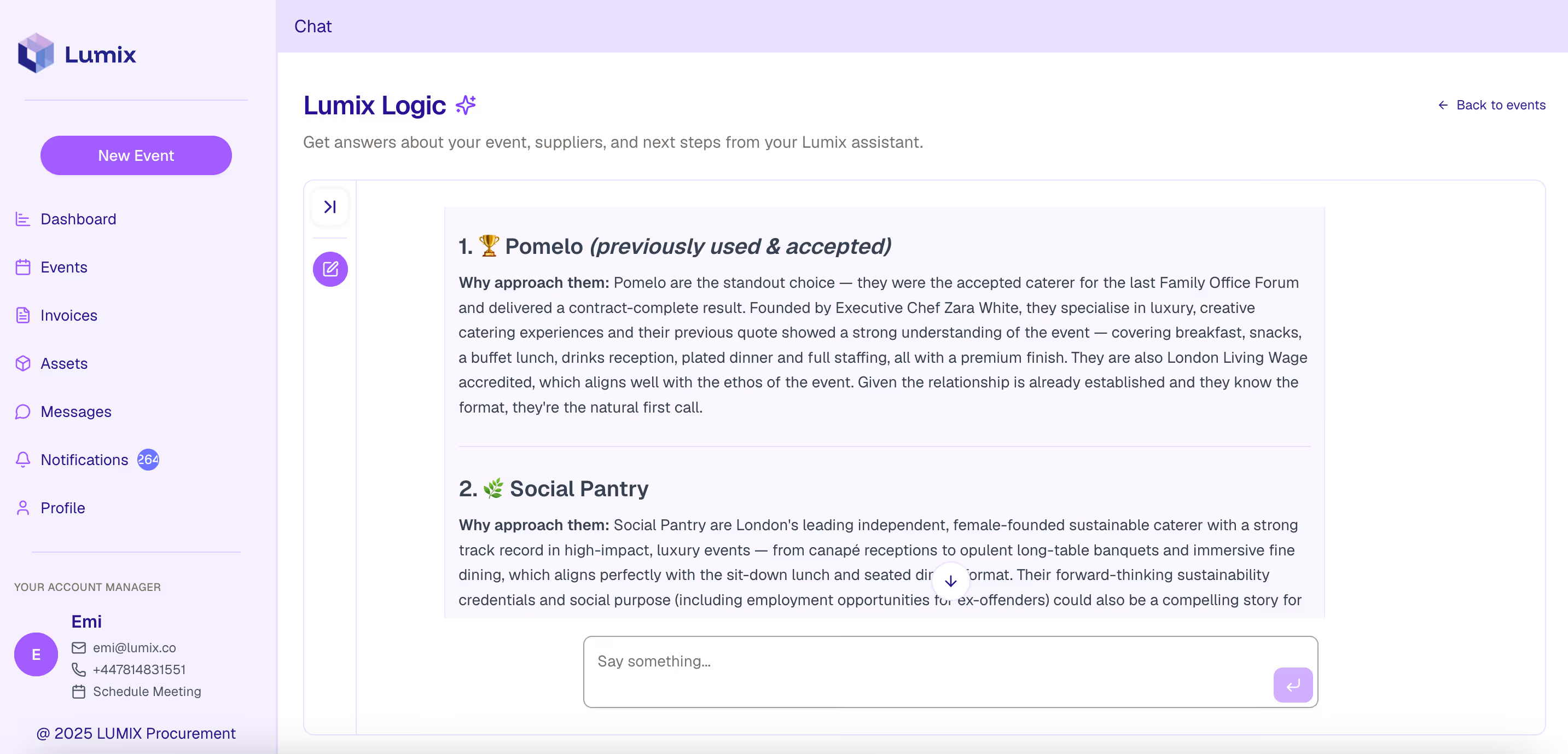
Lumix Logic: The AI Agent That Changes Everything About Event Planning
Lumix Logic is live. Here's why it's the biggest shift in event planning technology in years — and what it means for your team.
Frequently Asked Question
Have another question? Please contact our team!
Yes. The platform provides side-by-side quote comparisons that show what’s included (and what isn’t) in each proposal. You’ll see cost breakdowns, supplier notes, and Lumix’s benchmarked pricing insights all designed to help you make confident, data-driven decisions.
Yes. You can upload and store your existing brief templates, or use Lumix’s AI-assisted builder to generate new ones. The platform also learns from your past events, so future briefs can be created faster with pre-filled details and preferred suppliers.
Absolutely. Lumix is built for flexibility. You can update or amend briefs at any time through quote revisions. When you make changes, suppliers are automatically notified and can adjust their quotes accordingly, keeping everything transparent and version-controlled.
A Lumix-vetted supplier has been verified for legal identity, financial health, insurance, certifications, and recent performance. We don’t just check paperwork once — we continuously monitor suppliers’ live performance on the platform to ensure they meet professional, safety, and compliance standards.
Our vetting process happens in three levels: Verified: Baseline identity and compliance checks, legal registration, sanctions screening, insurance, and minimum financial health scores. Certified: Category-specific evidence such as food-hygiene, rigging, or data-security certifications, depending on the supplier’s role. Audited: For high-value or critical suppliers, we add deeper due diligence including third-party audits, ESG assessment, and verified delivery KPIs on Lumix.
Yes. We align our vetting standards with leading UK and global frameworks such as Achilles, Hellios FSQS/JOSCAR, Avetta, SafeContractor, and EcoVadis. Where appropriate, Lumix integrates or recognises these certifications within our supplier profiles to avoid duplicate checks.