9 Best Whova Alternatives: Top Competitors for Event Engagement & Conference Apps

.avif)
Weekly newsletter
Quick Summary
Whova is widely known for its mobile event app, attendee engagement features, and sponsor visibility, especially for conferences, associations, and community-led events.
But many organisers eventually start looking for Whova alternatives when they need:
- A more modern or flexible mobile experience
- Better networking or matchmaking
- Stronger branding control
- Improved virtual or hybrid support
- Or a platform that fits how their events are actually run today
This guide breaks down the best Whova competitors with a transparent look at strengths, trade-offs, pricing fit, and who each platform is really best for.
Important note: Lumix is not a direct Whova alternative and is therefore not ranked alongside engagement platforms. You’ll find it included later as a notable mention for teams whose needs extend beyond attendee engagement.
Shortlist: Best Whova Alternatives at a Glance
Why Teams Look for a Whova Alternative
Across user reviews, event organiser forums, and industry conversations, four consistent reasons come up.
1. Engagement is strong but the experience can feel dated
Whova’s app is functional and familiar, but many organisers feel:
- The UI hasn’t evolved much
- Branding options are limited
- The experience looks the same across events
For design-conscious brands, this becomes a problem.
2. Mobile-first is great but not enough on its own
Whova shines inside the app, but:
- Event websites and registration flows are basic
- Some teams need stronger pre-event journeys
- Others want deeper integration with marketing stacks
3. Networking expectations have changed
Attendees increasingly expect:
- Smart matchmaking
- 1:1 meeting scheduling
- Personalised agendas
Whova’s networking is solid, but newer tools go deeper.
4. Scaling across multiple events can feel limiting
For teams running:
- Many events per year
- Different formats (field events, conferences, communities)
Whova can feel like a great single-event tool, but less flexible as a program scales.
The Best Whova Alternatives
1. Eventee
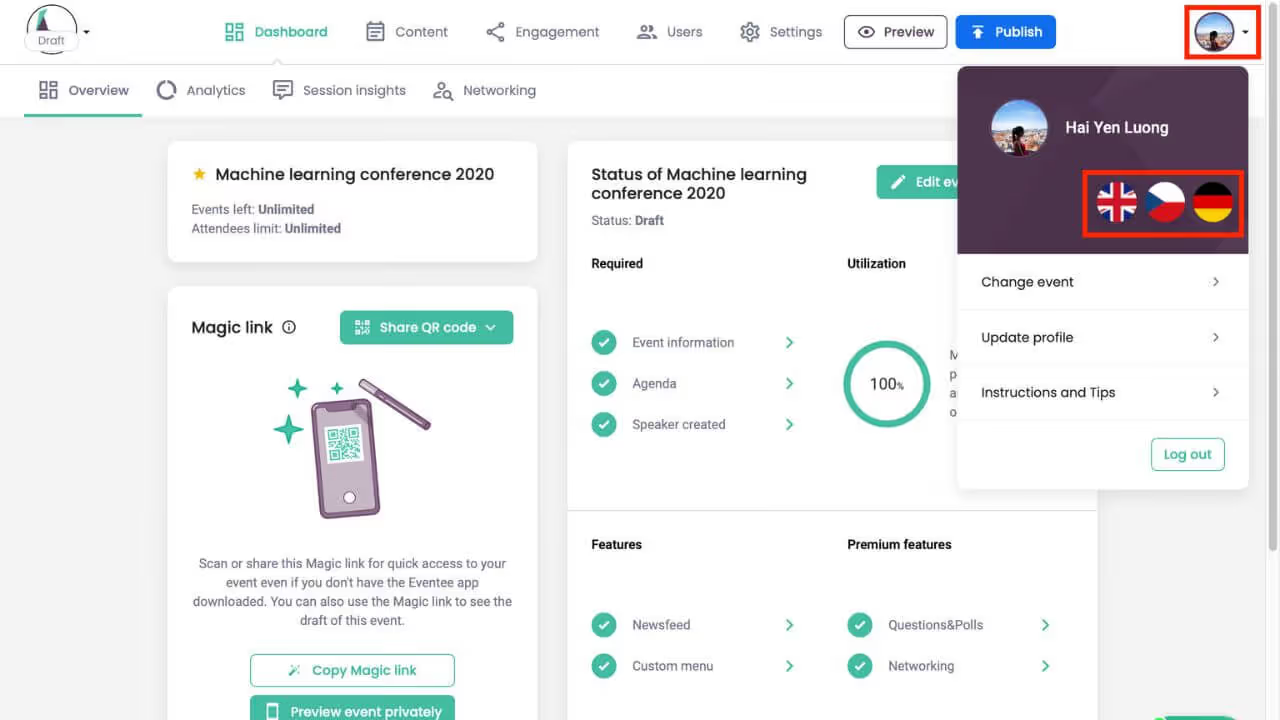
Best For: Conferences and internal events that want a clean, modern, mobile-first experience without operational complexity.
Eventee is often chosen by organisers who like Whova’s core idea, a centralised mobile experience, but want something that feels simpler, lighter, and more modern.
Where Whova can feel busy or cluttered, Eventee focuses on clarity: agendas are easy to navigate, speaker profiles are cleanly presented, and attendees generally need little to no guidance to get value from the app.
This makes Eventee particularly popular for:
- Internal company events
- Smaller professional conferences
- Community meetups
- Regional or one-day events
Strengths
- Very intuitive attendee experience with minimal learning curve
- Clean, modern UI compared to Whova’s more utilitarian design
- Quick setup and low operational overhead
- Affordable for smaller teams
Trade-offs
- Limited flexibility for complex registration or ticketing rules
- Sponsor and exhibitor tools are basic
- Not designed for large, multi-day expos
Pricing
- Affordable, tiered pricing aimed at SMB and internal teams
2. Bizzabo
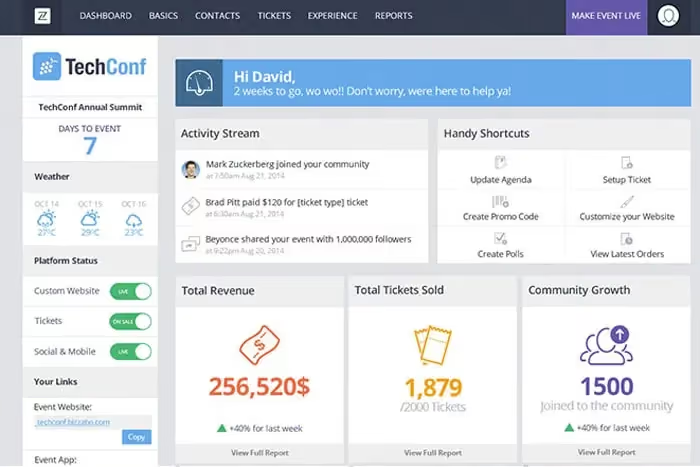
Best For: Marketing-led teams running large, branded conferences where sponsor experience and production quality matter.
Bizzabo competes with Whova at a higher level of ambition. It’s designed less as a “conference app” and more as a full event experience platform, covering websites, registration, engagement, sponsors, and hybrid delivery.
Teams often switch from Whova to Bizzabo when:
- Events become a core marketing channel
- Brand presentation matters more
- Sponsor revenue becomes a key KPI
Strengths
- Highly customisable event websites and registration flows
- Strong mobile app combined with a polished web experience
- Mature hybrid and virtual capabilities
- Advanced sponsor and exhibitor tooling
Trade-offs
- Significantly more complex than Whova
- Requires an experienced event owner internally
- Pricing can escalate quickly
- Overkill for simple or low-frequency events
Pricing
- Custom pricing; typically mid-market to enterprise
3. Swapcard
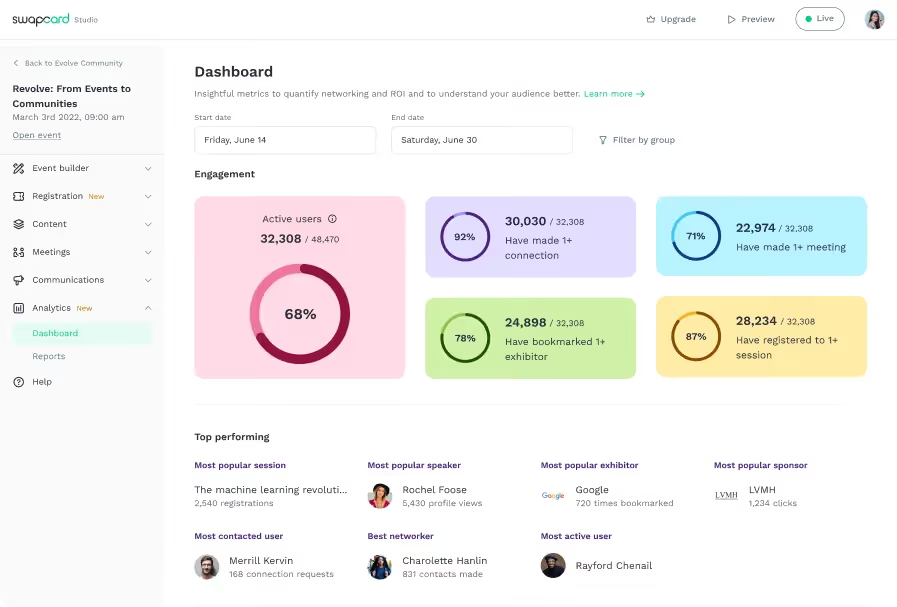
Best For: Conferences and trade shows where networking, matchmaking, and exhibitor ROI are central to the value proposition.
Swapcard approaches the problem from a different angle to Whova. Instead of treating networking as a feature, it treats it as the core product.
Its AI-driven matchmaking is often the reason organisers choose Swapcard, particularly when they need to demonstrate tangible value to exhibitors and sponsors.
Strengths
- Strong AI-powered matchmaking and recommendations
- Excellent exhibitor lead capture and analytics
- Works well for large conferences and expos
- Good balance of mobile and web experiences
Trade-offs
- Setup can feel heavier than Whova
- Interface is functional rather than beautiful
- Less suitable for small or informal events
Pricing
- Custom pricing; generally mid-market and above
4. Brella
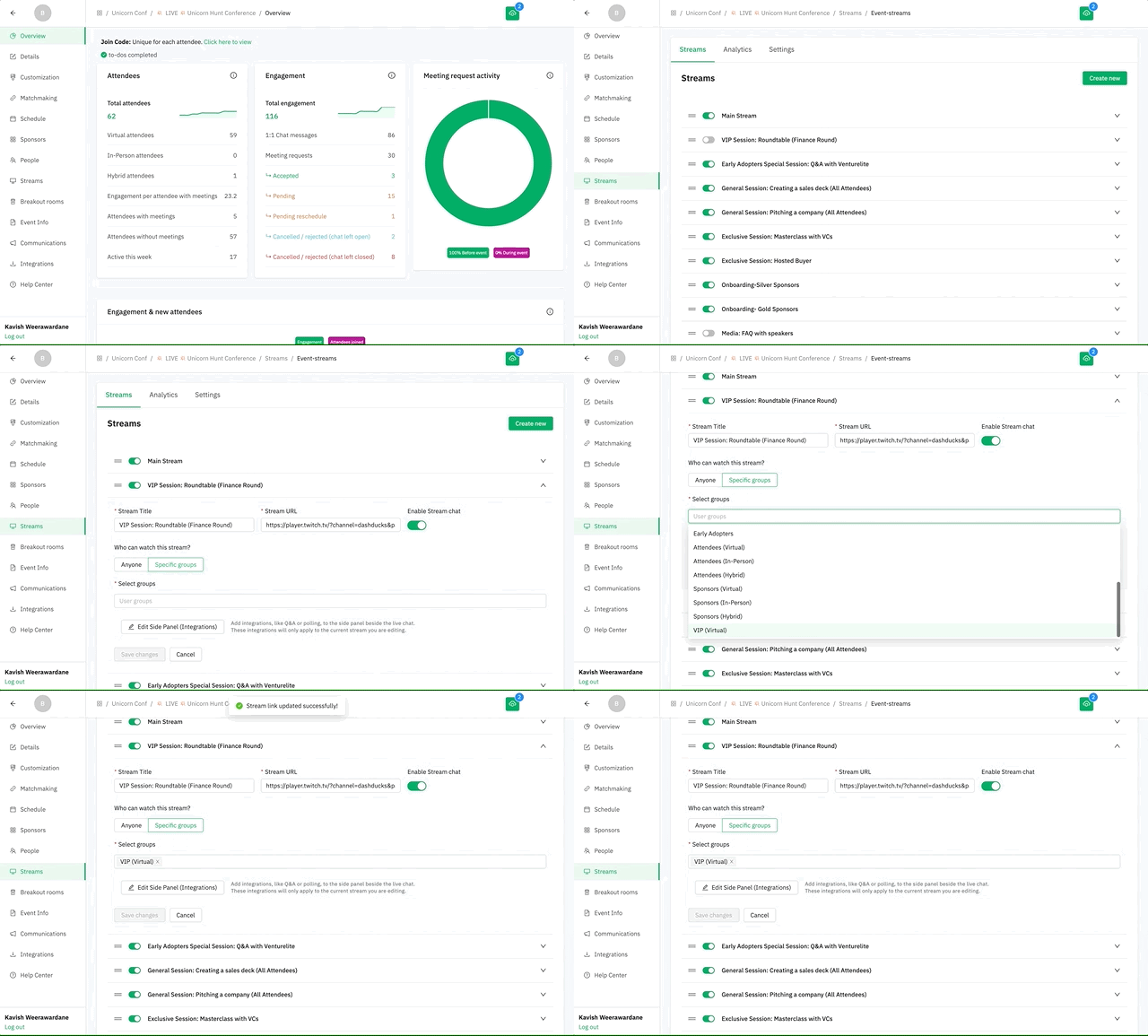
Best For: Relationship-driven events where 1:1 meetings are the primary outcome.
Brella is often used alongside other platforms rather than as a full replacement for Whova. Its strength lies in structured meetings, not content delivery.
It’s popular for:
- Investor events
- Partner summits
- Executive or invitation-only conferences
Strengths
- Excellent 1:1 meeting scheduling
- Strong matchmaking logic
- Clear ROI for relationship-focused events
Trade-offs
- Limited agenda and content management
- Requires integration with another event platform
- Not suitable as a standalone solution
Pricing
- Per-event or subscription-based; mid-market
5. Attendify
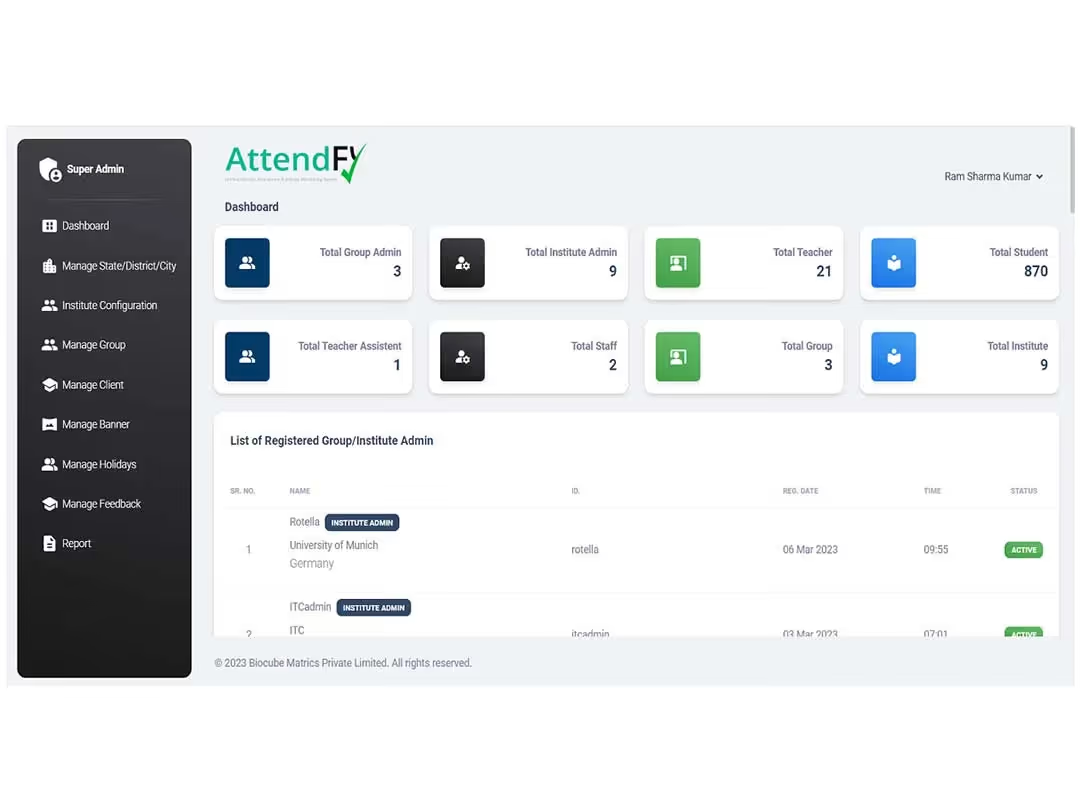
Best For: Teams that want more branding control over their mobile app than Whova provides.
Attendify is often chosen by organisers who are happy with Whova’s engagement model but want:
- A more white-labelled experience
- Greater control over how the app looks and feels
Strengths
- Strong white-labelling and branding options
- Clean attendee experience
- Useful audience data and insights
Trade-offs
- Weaker logistics and operational tooling
- Virtual event features are lighter
- Not designed for very large expos
Pricing
- Tiered mid-market pricing
6. Airmeet
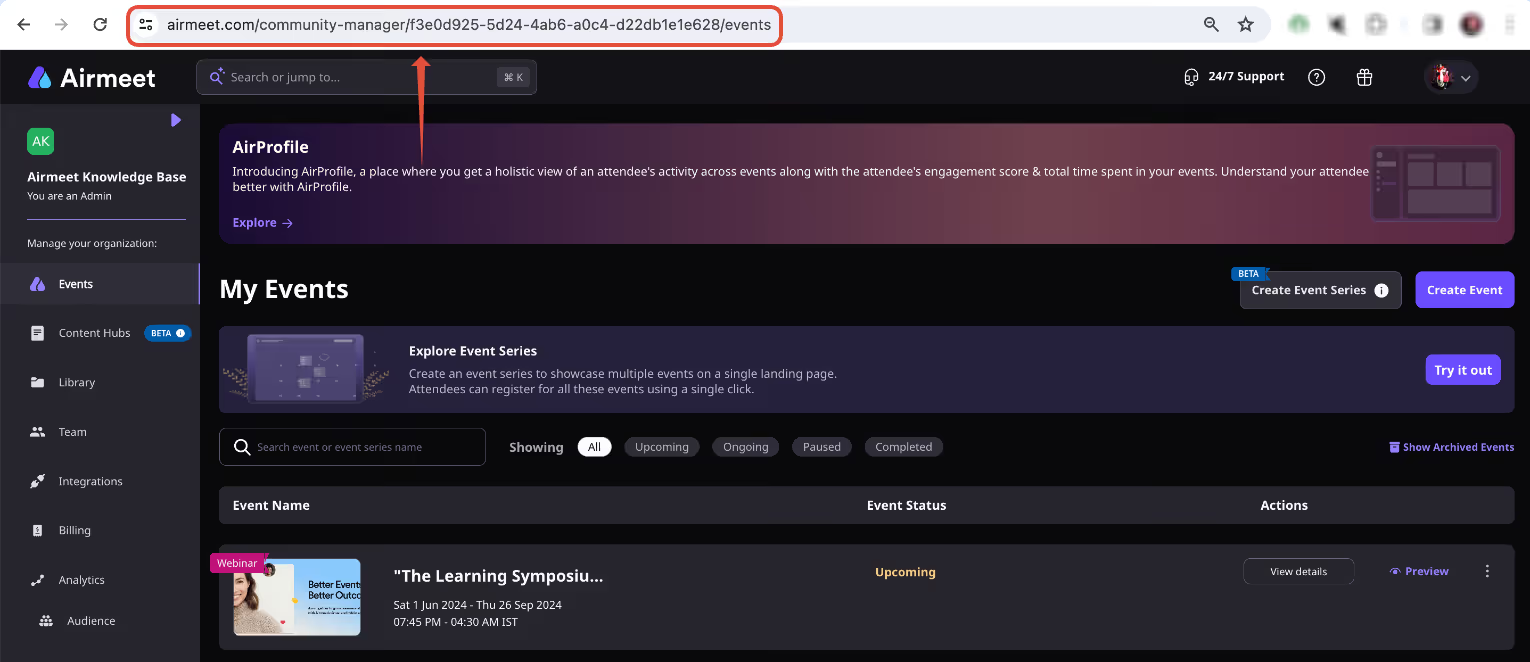
Best For: Community-led, discussion-driven virtual and hybrid events.
Airmeet stands out for its table-based networking model, which encourages conversation rather than passive consumption.
It’s commonly used for:
- Online communities
- Panel discussions
- Virtual summits
Strengths
- Highly interactive virtual experience
- Strong sense of community
- Good live engagement tools
Trade-offs
- In-person tooling is limited
- UI can feel busy
- Less suited to formal conferences
Pricing
- Tiered pricing; mid-market friendly
7. Hopin
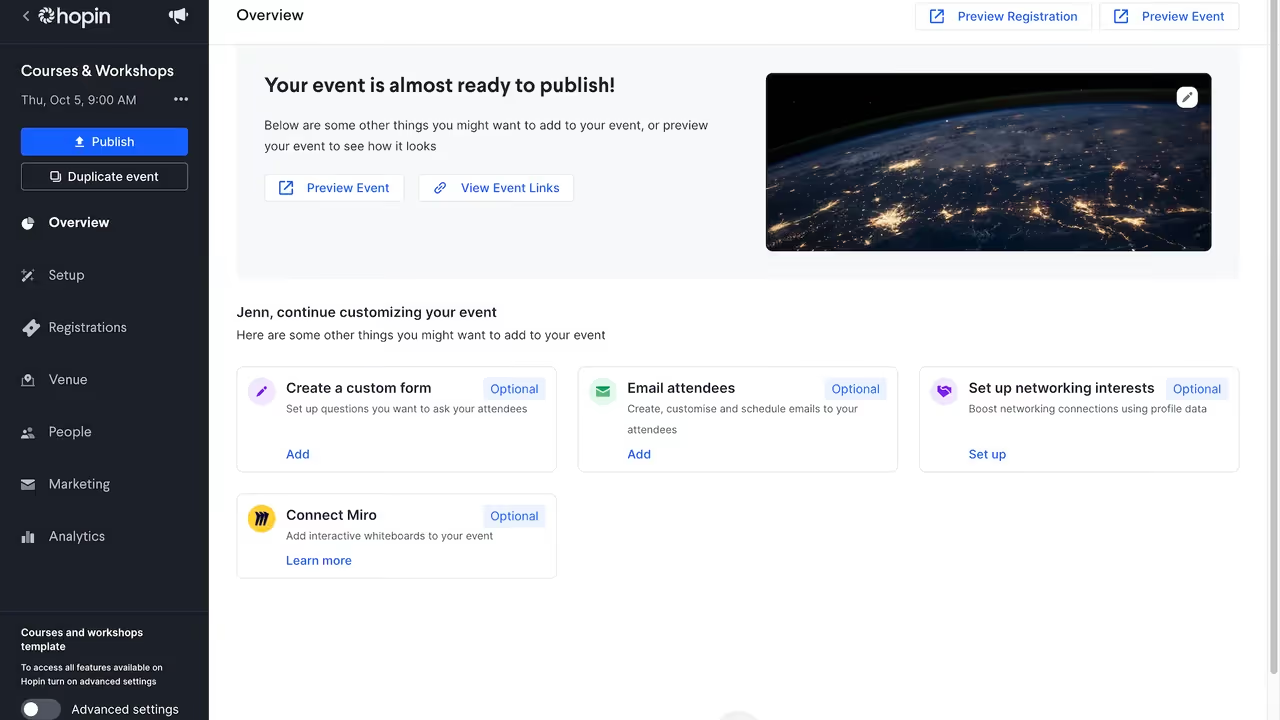
Best For: Large-scale virtual or hybrid events with heavy engagement needs.
Hopin (now RingCentral Events) was built for scale and remains a strong option for organisations running large virtual programs.
Strengths
- Robust virtual infrastructure
- Handles large audiences well
- Strong engagement features
Trade-offs
- Less compelling for in-person-only events
- Branding flexibility varies
- Pricing can be high for frequent use
Pricing
- Package-based; mid to high range
8. Swoogo
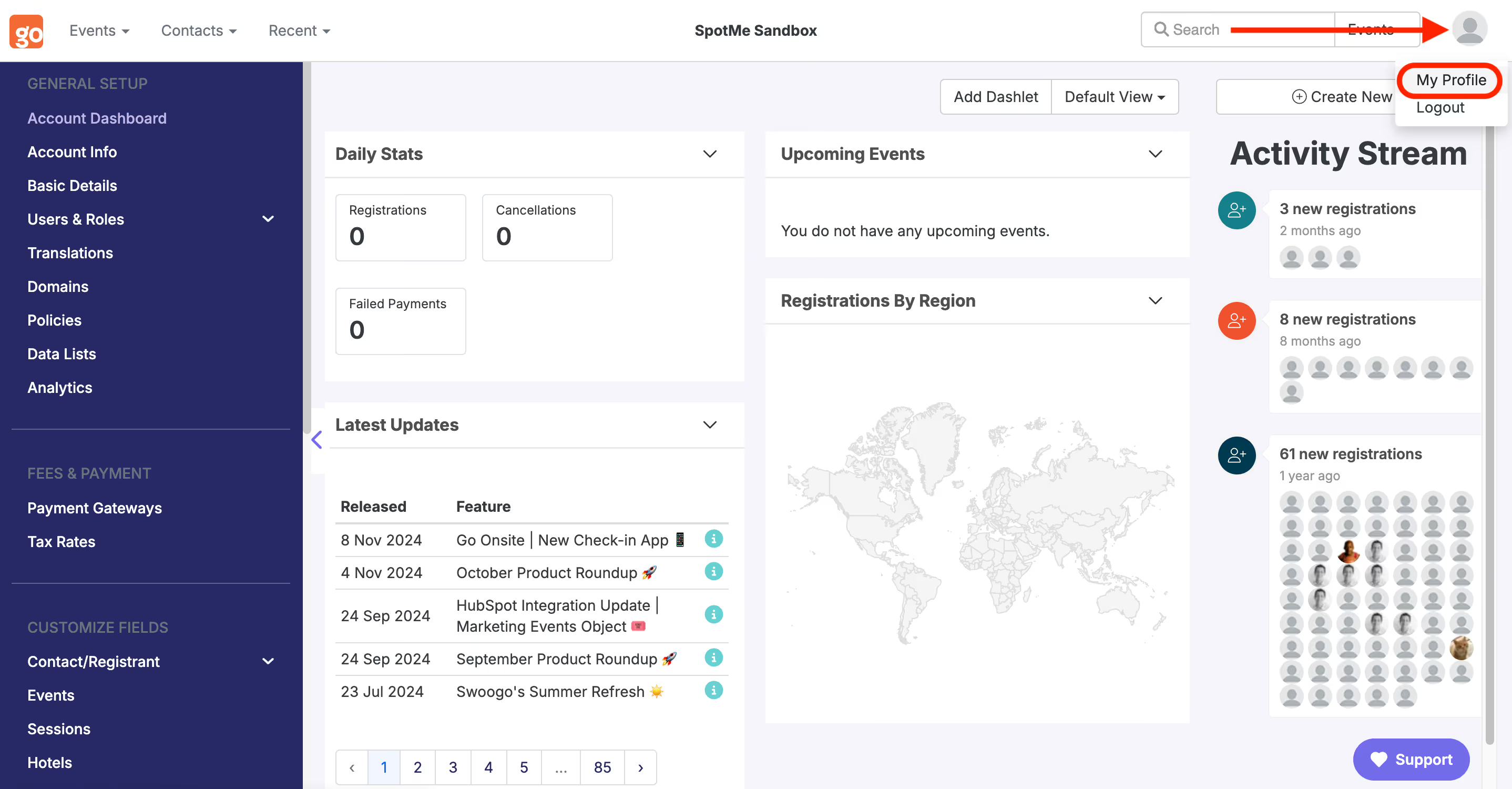
Best For: Teams running many events who need flexibility beyond mobile engagement.
Swoogo is often chosen when teams outgrow Whova’s mobile-first model and need:
- More control over registration logic
- Better integration with CRM and marketing systems
- Scalable templates for repeat events
Strengths
- Extremely flexible workflows
- Excellent for high-volume event programs
- Strong CRM and MAP integrations
Trade-offs
- No native mobile-first “wow” experience
- UI is more utilitarian
- Requires an ops-savvy owner
Pricing
- Predictable mid-market subscription pricing
Notable Mention: When Lumix Makes Sense
Lumix
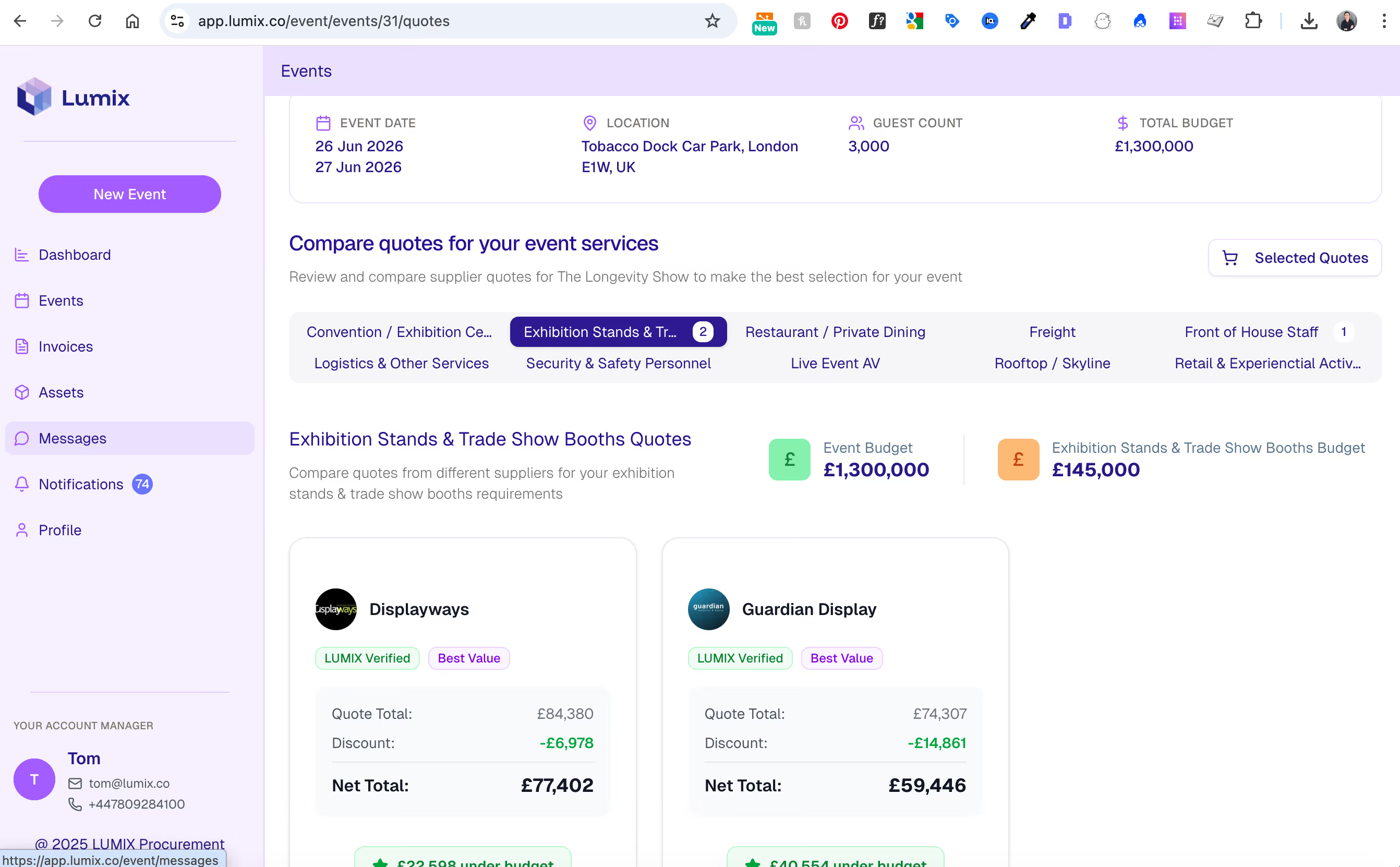
Lumix is not a Whova replacement and that’s intentional.
While Whova and its competitors focus on attendee engagement, Lumix is built for teams struggling with:
- Supplier sourcing
- Contract management
- Budget control
- Operational consistency across many events
Teams often discover Lumix after engagement stops being the biggest problem and usually when:
- They’re running many events per year
- Supplier complexity increases
- Procurement, finance, and operations become blockers
In practice, Lumix is frequently used alongside engagement platforms, not instead of them.
Lumix Blogs
Get the indise scoop: the latest tips, tricks, & product updates
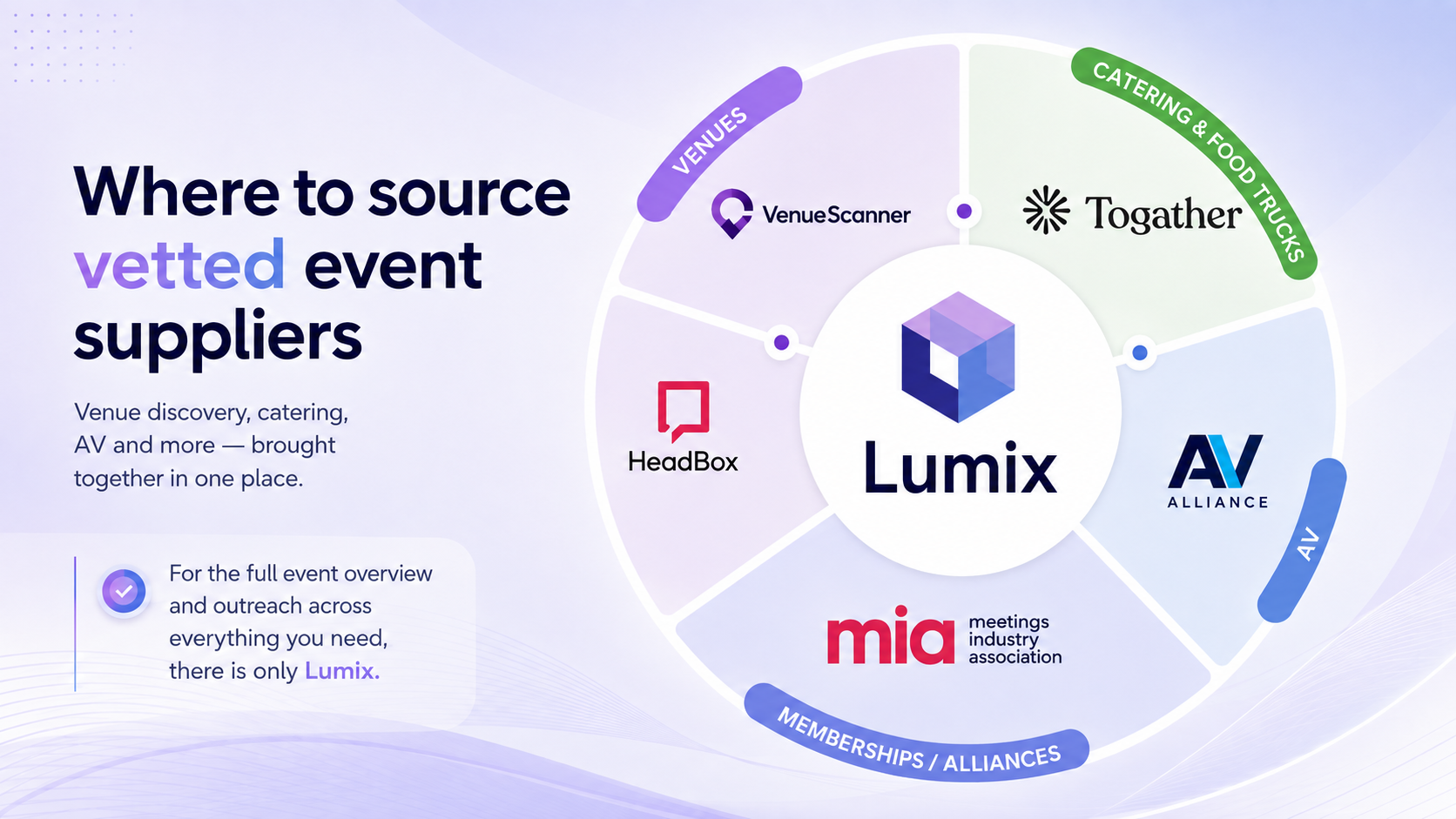
How to Choose a Vetted Event Supplier Network in 2026
Corporate event procurement in the UK increasingly runs through vetted vendor networks and specialist marketplaces rather than cold outreach, but the right choice depends on how many categories a brief actually spans.
Cvent vs Vetted Event Supplier Networks: A Procurement Comparison for UK Teams
Choosing between broad event supplier platforms and vetted networks shapes how much risk and cost control a procurement team actually has once a brief goes out.
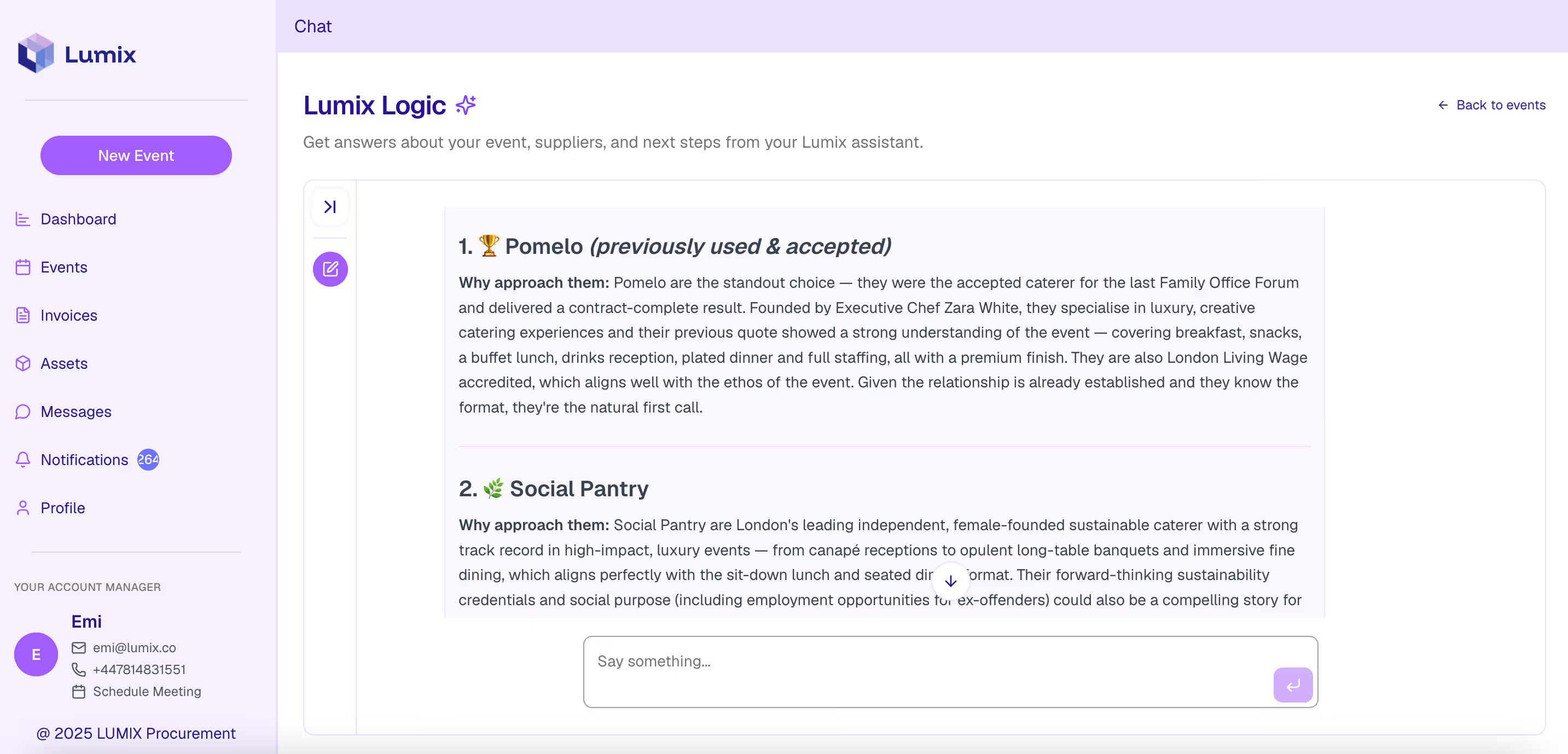
Lumix Logic: The AI Agent That Changes Everything About Event Planning
Lumix Logic is live. Here's why it's the biggest shift in event planning technology in years — and what it means for your team.
Frequently Asked Question
Have another question? Please contact our team!
Yes. The platform provides side-by-side quote comparisons that show what’s included (and what isn’t) in each proposal. You’ll see cost breakdowns, supplier notes, and Lumix’s benchmarked pricing insights all designed to help you make confident, data-driven decisions.
Yes. You can upload and store your existing brief templates, or use Lumix’s AI-assisted builder to generate new ones. The platform also learns from your past events, so future briefs can be created faster with pre-filled details and preferred suppliers.
Absolutely. Lumix is built for flexibility. You can update or amend briefs at any time through quote revisions. When you make changes, suppliers are automatically notified and can adjust their quotes accordingly, keeping everything transparent and version-controlled.
A Lumix-vetted supplier has been verified for legal identity, financial health, insurance, certifications, and recent performance. We don’t just check paperwork once — we continuously monitor suppliers’ live performance on the platform to ensure they meet professional, safety, and compliance standards.
Our vetting process happens in three levels: Verified: Baseline identity and compliance checks, legal registration, sanctions screening, insurance, and minimum financial health scores. Certified: Category-specific evidence such as food-hygiene, rigging, or data-security certifications, depending on the supplier’s role. Audited: For high-value or critical suppliers, we add deeper due diligence including third-party audits, ESG assessment, and verified delivery KPIs on Lumix.
Yes. We align our vetting standards with leading UK and global frameworks such as Achilles, Hellios FSQS/JOSCAR, Avetta, SafeContractor, and EcoVadis. Where appropriate, Lumix integrates or recognises these certifications within our supplier profiles to avoid duplicate checks.