Bang for Buck: How USD Exchange Rates Have Altered Global Event Spend


Weekly newsletter
When you're planning international events, every dollar counts, especially when it crosses borders.
If you're a CMO or procurement lead who's been running international events over the past few years, you've likely felt the impact of currency shifts. A supplier quote that worked last quarter suddenly stretches the budget. Venue options fluctuate in and out of reach. And a shifting USD can make or break the “bang for buck” of an event budget, not because the scope has changed, but because the exchange rate has.
Over the past 18–24 months, the U.S. dollar has surged against many global currencies. That’s changed how event teams plan, price, and prioritise. For some, it’s created new opportunities to stretch spending further. For others, it’s made overseas delivery more expensive and harder to justify.
In this blog, we’ll explore how USD fluctuations are reshaping global event spend, what recent trends mean for CMOs and procurement leaders, and how to make smarter, more resilient decisions in a volatile economic landscape.
Why the USD Has Outsised Influence on Global Event Budgets
We all see the U.S. dollar as a financial benchmark, and for good reason. Around 60% of central bank reserves globally are held in USD, and a large share of international contracts, services, and commodities are priced in dollars, even when the buyer and supplier are based in different regions. In the events world, this shows up more often than people expect in AV quotes from Canada, venue deposits in Europe, or production costs in Asia.
As of early 2025, the dollar is trading near a two-year high. A few current exchange rates:
- 1 GBP = 1.35 USD
- 1 EUR = 1.17 USD
- 1 CAD = 0.73 USD
- 1 CNY = 0.14 USD
This strength gives U.S.-based teams more purchasing power overseas. A £100,000 venue in London now converts to roughly $135,000, which may be more affordable than it was just a year or two ago. The same is true for suppliers in Europe or Asia, as costs quoted in local currencies are cheaper in dollar terms, even if the scope stays the same.
But for UK-based teams or any business sourcing U.S. services, the picture looks very different. A $200,000 event package in New York now equals around £148,400. That kind of swing can quietly stretch a budget or trigger internal sign-off delays, especially across multiple suppliers and currencies.
This is where many teams run into friction. Currency often isn’t tracked with the same attention as schedules or logistics, which means financial risk builds up with little visibility. On paper, the budget looks fine. But once it’s time to pay suppliers, unexpected conversions throw things off.
For teams managing cross-border spend, tracking the dollar’s impact has become essential. It influences which suppliers you choose, how contracts are structured, and what your event costs. Even small currency shifts can create major variance across a full calendar of international events, and the more fragmented your supplier network, the more important it is to stay ahead of the numbers.
Strong Dollar vs. Weak Dollar: Two Sides of the Same Coin
When the U.S. dollar strengthens, global event budgets can stretch. U.S.-based teams see reduced costs when sourcing in markets like the UK, Europe, or Asia, making higher-tier venues and services more accessible. Some U.S. companies use this advantage to shift more events abroad where exchange rates offer better value.
When the dollar weakens, the cost of overseas delivery rises for U.S. teams, often leading to more domestic events. For international planners, including those in the UK, a weaker dollar means their budgets convert to more, making U.S.-based suppliers and services more affordable.
In both cases, the direction of the dollar has a real influence on decisions around destination, delivery model, and supplier mix. And in a climate where 33% of B2B event budgets are decreasing, even small currency shifts are becoming strategic considerations. While some teams may see their budgets increase, the wider trend points toward doing more with less, and knowing when the dollar works in your favour is part of that.
Planning Events with Currency Volatility in Mind
Exchange rates move. That’s a given. The question is whether they quietly eat into your budget or become something you’re ready for. If you're managing event spend, there are a few ways to build more control into the process:
Add a Currency Buffer to Your Event Budget
If your event includes overseas suppliers, you should add a buffer for currency movement. Even a 3 to 5 percent swing can affect large commitments like venue deposits, AV contracts, or international freight, especially when multiple currencies are involved. You don’t need to predict the market, but padding high-impact line items such as production, staging, or logistics gives you room to absorb changes without reworking the entire budget.
Use Forward Contracts to Lock in Rates
If you’ve confirmed spend in another currency, a forward contract can help you manage risk. It’s an agreement with your bank or currency provider to fix the exchange rate for a future payment, often tied to a specific amount and date. This gives you clarity on what the cost will be, regardless of how the market moves. For high-value items like venue deposits, production services, or international freight, locking in the rate can protect your margin and avoid last-minute budget changes. Make sure the contract covers the full amount and aligns with your payment schedule so there are no gaps later.
Negotiate in the Currency That Works for You
When reviewing supplier contracts, take a moment to think about which currency puts you in the strongest position. Aligning the agreement to your base currency can limit exposure to sudden shifts. If you're a UK-based team working with U.S. partners, negotiating in GBP can keep costs predictable and simplify approvals. In other cases, it may make sense to agree on a stable third currency if both sides prefer neutrality.
Work Closely with Finance and Procurement
Managing currency risk should not sit with the event team alone. Your finance and procurement colleagues often monitor exchange rates more closely and may already have tools in place to manage exposure across departments. Involving them early in the planning process helps you structure payments, review supplier quotes with context, and decide when to lock in rates or leave them flexible. Their input can bring clarity to spending decisions and reduce the impact of unexpected shifts later on.
Use a Platform That Centralises Spend and Supplier Management
The Lumix team has worked on global events for over a decade and seen how fragmented supplier networks, inconsistent payment terms, and disconnected contracts can make event delivery harder than it needs to be. For CMOs and procurement leads, this often means juggling separate processes with limited visibility over total spend.
The Lumix platform is built to change that. It brings your suppliers, budgets, and event briefs into one system so you can manage spending more intentionally with far less back and forth.
Here’s how Lumix supports teams working across currencies and markets:
- Aggregate global spend across conferences, exhibitions, and trade shows through a vetted supplier network.
- Centralise payments with one contract and one set of terms, regardless of supplier location.
- Set spend controls and approvals that align with finance and procurement policies.
- Compare quotes easily with a tool that simplifies complex RFP responses side by side.
- Build consistent briefs using an AI-powered tool that integrates brand guidelines and RFP requirements.
- Get supplier recommendations based on your brief, timelines, and past event data.
Teams using Lumix have reported up to 30 percent savings on international event delivery by reducing duplicated effort, improving rate consistency, and gaining more control over supplier relationships.
The Currency Signals Event Teams Should Watch
While no one can predict where currency markets will go, many analysts expect the U.S. dollar to ease slightly against other major currencies through 2025. For event teams managing overseas spend, that could mean a slow return to higher costs for venues, suppliers, and services priced in local currencies. If your contracts are still based on today’s rates, it may be worth locking them in early.
Short-term volatility will remain. Shifts in interest rates, inflation, or global policy can still move markets quickly. Regular check-ins with your finance team or currency partner can help ensure your budget assumptions are holding up, especially if you're planning multi-region events or managing spend in more than one currency.
There’s also a broader shift underway. More teams are exploring contract and pricing models outside the U.S. dollar, especially with global attendees or local suppliers. Staying flexible will help you navigate whatever comes next, without letting currency become the bottleneck.
Currency fluctuation is a given, make sure you always keep it in mind.
Events are, and will remain, a critical investment for brand visibility, customer engagement, and business growth. As currency markets shift and budgets tighten, making every dollar, pound, or euro count becomes even more important. Teams that track exchange rate impact, manage supplier contracts smartly, and streamline spend decisions are better positioned to deliver successful global events in any market condition.
Book a demo and see how Lumix helps you manage global event spend with more clarity, control, and confidence.
Lumix Blogs
Get the indise scoop: the latest tips, tricks, & product updates
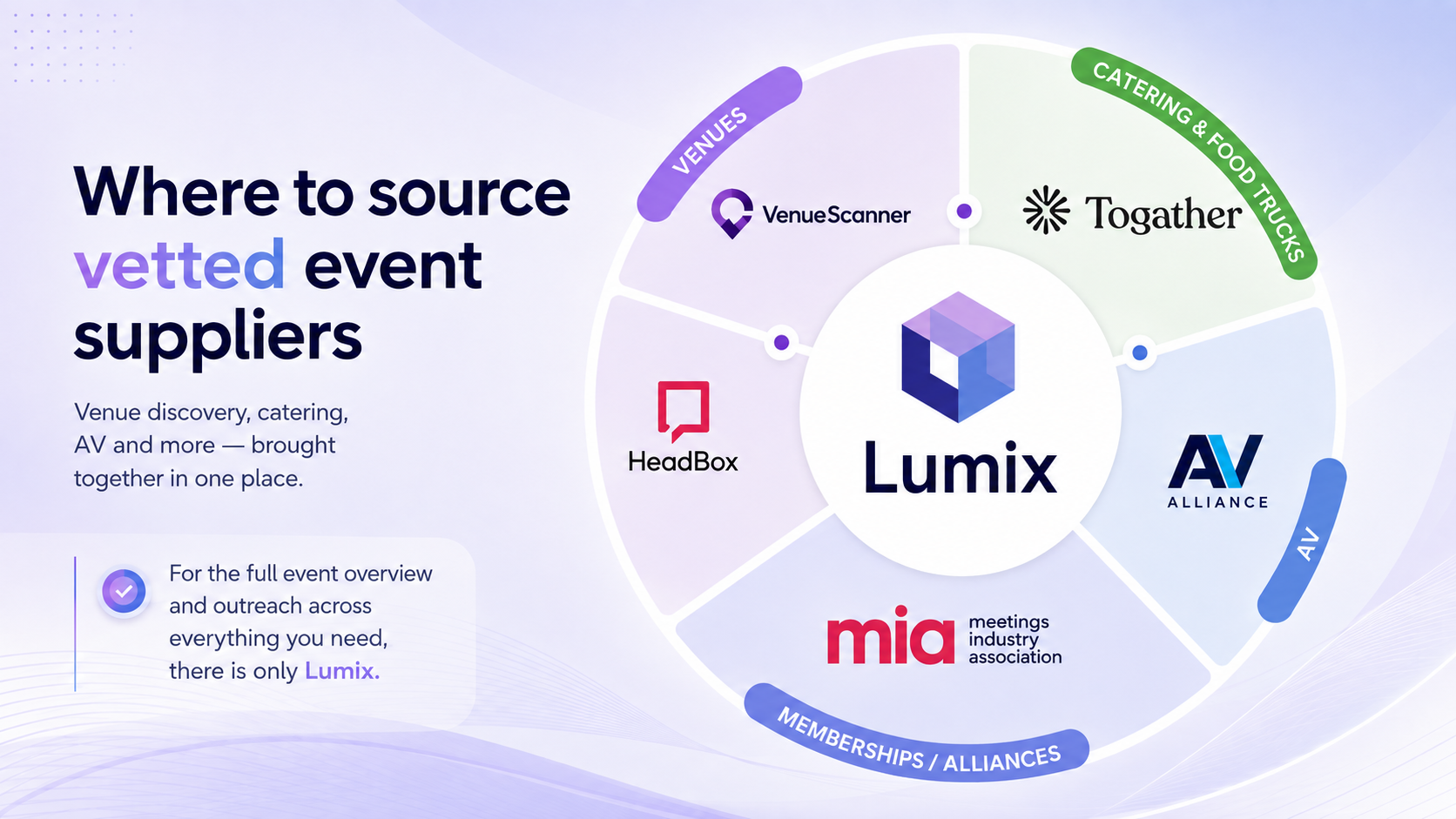
How to Choose a Vetted Event Supplier Network in 2026
Corporate event procurement in the UK increasingly runs through vetted vendor networks and specialist marketplaces rather than cold outreach, but the right choice depends on how many categories a brief actually spans.
Cvent vs Vetted Event Supplier Networks: A Procurement Comparison for UK Teams
Choosing between broad event supplier platforms and vetted networks shapes how much risk and cost control a procurement team actually has once a brief goes out.
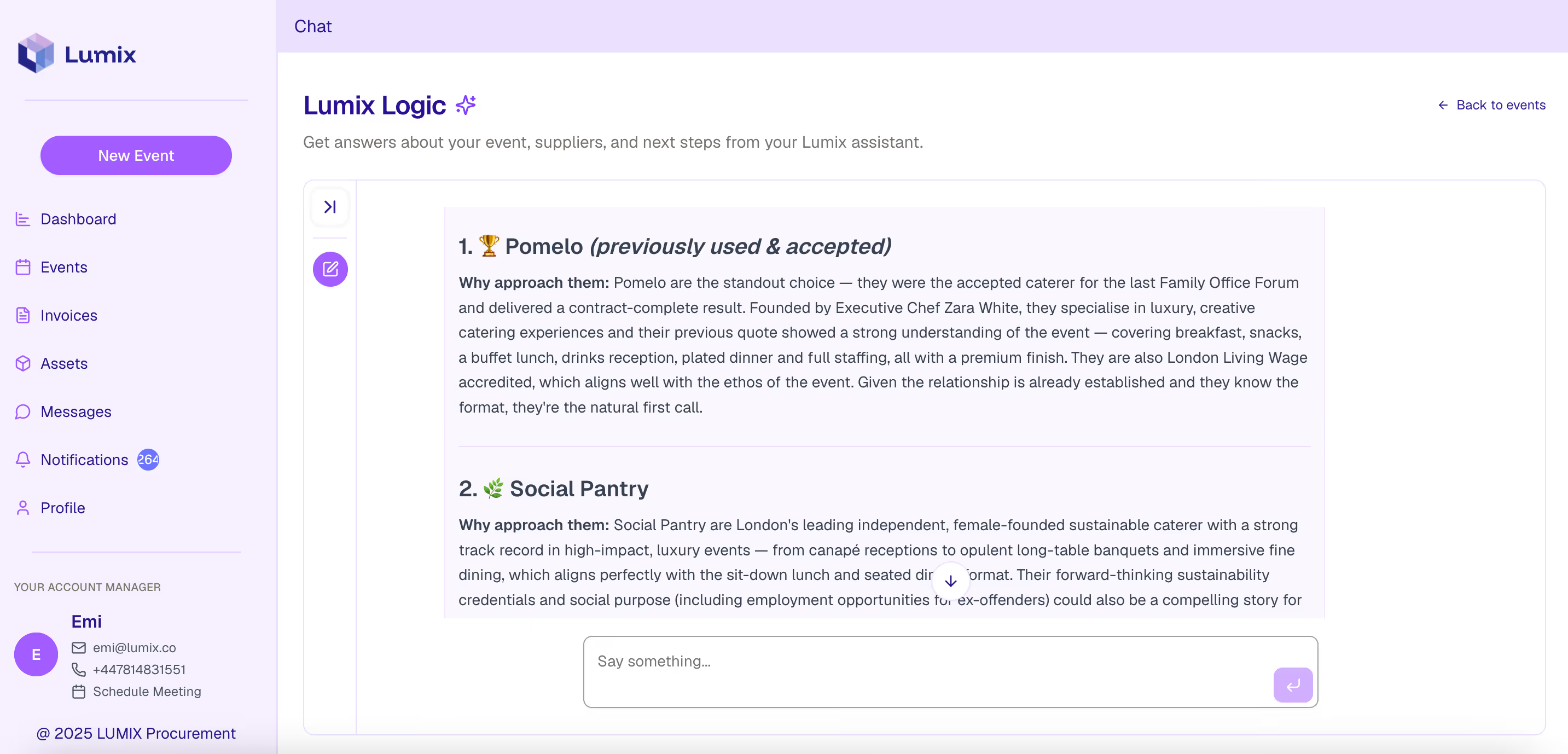
Lumix Logic: The AI Agent That Changes Everything About Event Planning
Lumix Logic is live. Here's why it's the biggest shift in event planning technology in years — and what it means for your team.
Frequently Asked Question
Have another question? Please contact our team!
Yes. The platform provides side-by-side quote comparisons that show what’s included (and what isn’t) in each proposal. You’ll see cost breakdowns, supplier notes, and Lumix’s benchmarked pricing insights all designed to help you make confident, data-driven decisions.
Yes. You can upload and store your existing brief templates, or use Lumix’s AI-assisted builder to generate new ones. The platform also learns from your past events, so future briefs can be created faster with pre-filled details and preferred suppliers.
Absolutely. Lumix is built for flexibility. You can update or amend briefs at any time through quote revisions. When you make changes, suppliers are automatically notified and can adjust their quotes accordingly, keeping everything transparent and version-controlled.
A Lumix-vetted supplier has been verified for legal identity, financial health, insurance, certifications, and recent performance. We don’t just check paperwork once — we continuously monitor suppliers’ live performance on the platform to ensure they meet professional, safety, and compliance standards.
Our vetting process happens in three levels: Verified: Baseline identity and compliance checks, legal registration, sanctions screening, insurance, and minimum financial health scores. Certified: Category-specific evidence such as food-hygiene, rigging, or data-security certifications, depending on the supplier’s role. Audited: For high-value or critical suppliers, we add deeper due diligence including third-party audits, ESG assessment, and verified delivery KPIs on Lumix.
Yes. We align our vetting standards with leading UK and global frameworks such as Achilles, Hellios FSQS/JOSCAR, Avetta, SafeContractor, and EcoVadis. Where appropriate, Lumix integrates or recognises these certifications within our supplier profiles to avoid duplicate checks.